
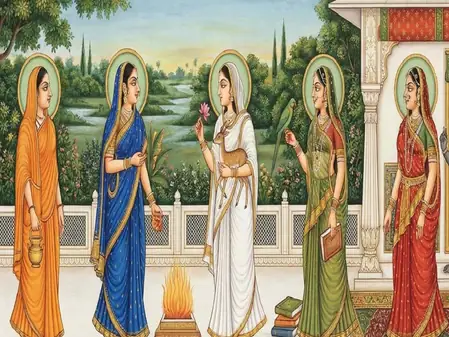
On International Women’s Day, we turn our gaze to the timeless tales of strength embedded in Hindu scriptures. While goddesses like Durga, Lakshmi, and Saraswati embody power, prosperity, and wisdom, five extraordinary women—known as the Panchakanya—stand out not as deities but as paragons of courage, patience, and resilience. A sacred verse from the Brahma Purana immortalizes them: Ahilya, Draupadi, Tara, Kunti, and Mandodari. Reciting their names daily is believed to erase even the gravest sins, a testament to their exalted status.
These women navigated unimaginable trials, from betrayal and exile to moral dilemmas in royal courts. Ahilya, the stunning wife of sage Gautama, fell victim to Indra’s deceit. Cursed to turn into stone, she endured centuries of immobility until Lord Rama’s touch restored her. Her story underscores forgiveness and redemption amid profound injustice.
Draupadi, the fiery Yajnaseni, refused to accept the humiliation of her disrobing in the Kaurava court. Her unyielding demand for justice ignited the Kurukshetra War, symbolizing a woman’s right to dignity and retribution. Tara, wife of monkey king Vali, displayed sharp intellect after her husband’s death. Marrying Sugriva to stabilize the kingdom, she governed with foresight, proving leadership transcends gender.
Kunti, mother of the Pandavas, exemplified selfless sacrifice. Unwed and pregnant with divine sons, she raised five warriors through exile and war, instilling dharma in them. Mandodari, Ravana’s wise consort and devout Shiva follower, repeatedly urged her husband to abandon his sinful path and return Sita, highlighting moral courage against tyranny.
In an era celebrating women’s empowerment, the Panchakanya remind us that true power lies in enduring adversity with grace. Their legacies continue to inspire, chanted in rituals and etched in cultural memory, affirming that patience and ethics triumph over chaos.