
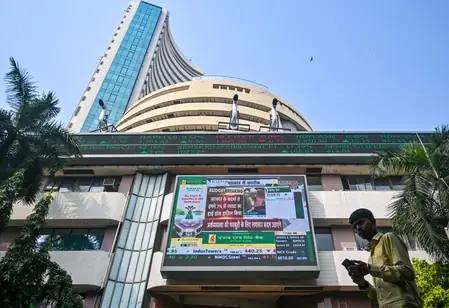
Mumbai’s stock market closed the week on a sour note, with the Sensex and Nifty plunging nearly 3% amid escalating Middle East tensions and relentless FII selling. Investors watched anxiously as geopolitical risks collided with global market jitters, pushing benchmark indices to multi-week lows.
The BSE Sensex shed 2.9%, tumbling from 81,287.19 to 78,918.90, while the Nifty 50 mirrored the decline, slipping from 25,178.65 to 24,450.45. This marked a turbulent five days dominated by foreign institutional investors (FIIs) who offloaded over ₹23,000 crore worth of equities, prioritizing risk aversion amid rising crude oil prices.
Brent crude surged close to $86 per barrel, fueled by fears of supply disruptions in the Middle East. This spike amplified concerns for India’s import-dependent economy, adding pressure on inflation and corporate margins. Broader markets fared no better, with midcap and smallcap indices also down around 3%.
Sector-wise carnage was evident: Realty plunged 4.9%, Oil & Gas 4.8%, Bankex 4.6%, Auto 3.9%, and Consumer Durables 3.1%. A rare bright spot emerged in Capital Goods, up 0.2%, and Defence stocks rallied nearly 3% as investors sought safe havens amid global uncertainties.
Domestic institutional investors (DIIs) stepped in robustly, cushioning the fall with steady buying. Experts note this tug-of-war between global headwinds and local resilience prevented a deeper rout. ‘FIIs are in full de-risking mode due to energy price volatility,’ said a leading analyst, highlighting SIP inflows and DII support as key stabilizers.
The Nifty now hovers near its 200-day moving average at 24,450, a critical technical level. Volatility spiked, with India VIX jumping over 11%, signaling heightened investor caution. Despite short-term pains, long-term market fundamentals remain solid, bolstered by domestic flows. Traders eye next week’s cues from oil markets and global geopolitics for direction.