
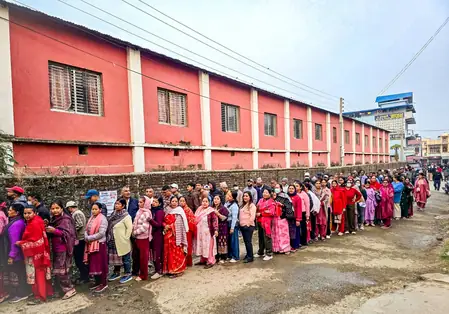
Kathmandu’s polling stations fell unusually quiet on Thursday as Nepal wrapped up its parliamentary elections in a largely peaceful manner. While the nation awaits results, the strikingly low voter turnout has raised eyebrows, signaling widespread apathy among the populace. This vote, the first since the youth-led Gen Z movement, carried high expectations but delivered disappointing participation.
Acting Chief Election Commissioner Ram Prasad Bhandari addressed the media, revealing preliminary figures pointing to a turnout hovering around 60 percent. Should final numbers confirm this, it would mark the lowest since the 1991 general elections. For context, the 2022 polls saw 61.41 percent participation.
‘Detailed data is still being compiled,’ Bhandari noted. ‘In several constituencies, voting continues at some centers for those who entered before the deadline.’ He emphasized that, barring isolated incidents, national and international observers reported a smooth process.
With ballot boxes secured, counting will commence promptly. In 15 remote districts, helicopters will transport them, underscoring logistical challenges in the Himalayan terrain. Nepal boasts 18.9 million registered voters, yet some stations witnessed boycotts fueled by anti-government sentiment.
‘This isn’t anger at the Commission but at the government,’ Bhandari observed, urging authorities to reflect. The elections, held nearly two years early, stemmed from last September’s Gen Z protests that toppled former PM KP Sharma Oli’s administration. Following his appointment, Oli dissolved parliament at youth leaders’ behest, mandating polls within six months.
Notably, over two-thirds of voters are newly registered Gen Z members, hinting at rising youth engagement ahead of 2026. Competition is fierce with 3,406 candidates in the First-Past-The-Post system and 3,135 in proportional representation. As results unfold, Nepal watches to see if this low turnout reshapes its political landscape.