
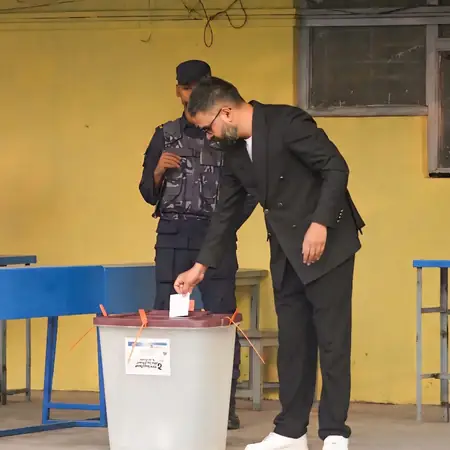
Kathmandu witnessed a strong start to its parliamentary elections on Thursday, with over 4 million voters exercising their franchise by 1 PM, marking about 24% turnout from the total registered electorate. The Election Commission reported smooth proceedings across the nation, signaling a robust democratic exercise in the Himalayan country.
Voting kicked off at 7 AM amid high anticipation, as nearly 18.9 million eligible voters, including over 915,000 first-timers, headed to the polls. This election holds special significance as the first since the Gen-Z uprising last September that ousted the government led by former Prime Minister KP Sharma Oli.
The polls are set to elect 275 members to the lower house: 165 through the first-past-the-post system and 110 via proportional representation. Authorities emphasized the peaceful atmosphere, with police spokesperson Deputy Inspector General Abi Narayan Kafle noting only minor isolated incidents that were swiftly managed.
In Dolakha district’s Tamakoshi Rural Municipality, a candidate’s agent allegedly attempted to assault a polling officer after being denied permission for unauthorized voting. Police fired warning shots in the air to restore order, halting voting temporarily while an all-party meeting addresses the issue. Earlier in Sarlahi-4 constituency, a brief scuffle occurred at a polling center where Nepali Congress president Gagan Thapa faces off against Rastriya Swatantra Party’s Amresh Kumar Singh.
Despite these hiccups, no major disruptions have marred the process. Top leaders, including Prime Minister Sushila Karki, Nepali Congress chief Gagan Thapa, CPN-UML chairperson KP Sharma Oli, CPN coordinator Pushpa Kamal Dahal ‘Prachanda’, RSP president Rabi Lamichhane, and PM candidate Balen Shah, cast their votes early.
Post-voting, PM Karki urged citizens to participate actively, stating, ‘Your precious vote shapes our future.’ With hours left in the polling day, officials anticipate even higher turnout, underscoring Nepal’s commitment to democratic renewal after recent political turbulence.