
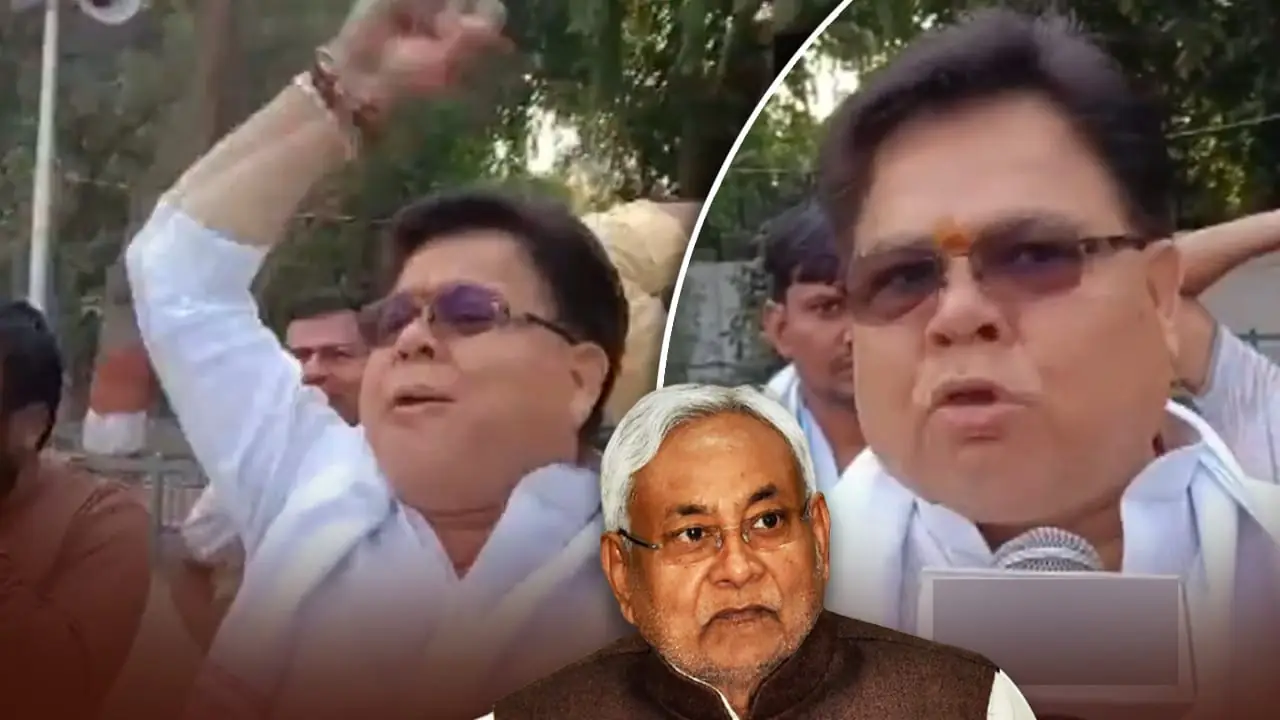
Patna’s political landscape erupted into fervor on Thursday as hundreds of Janata Dal United (JDU) workers gathered outside Chief Minister Nitish Kumar’s residence. Amid swirling rumors of Nitish Kumar eyeing a Rajya Sabha seat, loyal party cadres voiced fierce opposition, demanding fresh elections if any leadership change is on the cards.
The protest, led by prominent JDU leader Rajiv Ranjan Patel, saw supporters chanting slogans in unwavering support for their long-standing leader. ‘We toiled blood and sweat to make Nitish the CM. If you want to replace him, call for elections and prove your mandate,’ Patel declared, capturing the sentiment of a party rank deeply unsettled by the developments.
Speculation intensified after reports suggested Nitish might vacate his CM post for the Upper House. Workers accused ‘Delhi forces’ of plotting against their leader, with emotions running high even as Holi celebrations were overshadowed by political anxiety. In a dramatic twist, Nitish’s son Nishant Kumar is set to formally join JDU today, with national executive president Sanjay Jha overseeing his induction at party headquarters around 10:30 AM.
Patel minced no words, stating the party would physically prevent Nitish from filing his Rajya Sabha nomination. ‘Send Nishant if you must, but Nitish stays as CM. Bihar’s people voted for him until 2030, not for some interim arrangement,’ he asserted. The outpouring of grief from cadres, many reportedly in tears, underscored the personal loyalty Nitish commands after decades at the helm.
While Sanjay Singh, another JDU voice, acknowledged Nitish’s authority in any decision, he echoed the demand for him to remain in Bihar. ‘Our best leader’s choice we respect, but the state’s masses crave his continued stewardship amid rising unease.’ The standoff highlights deepening rifts within Bihar’s ruling coalition, with workers insisting no decision can sideline Nitish without public verdict.
As tensions simmer, the message from Patna is clear: Bihar’s political future hinges on Nitish Kumar, and any shift demands electoral legitimacy. The coming hours could redefine the state’s power dynamics.