
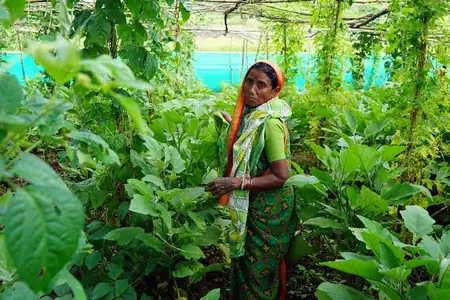
In the lush, hilly terrains of Madhya Pradesh’s Mandla district, a revolutionary agroecological homestead model is transforming backyards into thriving hubs of production, nutrition, and empowerment. A recent report highlights how this initiative, led by the CGIAR Multifunctional Landscapes Program and Professional Assistance for Development Action (PRADAN), has dramatically elevated the lives of tribal women.
Focusing on maximizing land use across varying elevations, the model promotes diverse vegetable cultivation, crop rotation, bio-composting, rainwater harvesting, and integrated livestock feeding using crop residues. The results are staggering: production diversity has surged by 350%, dietary variety has doubled, and consumption of nutrient-rich green leafy vegetables has jumped 70%.
Backyard poultry has enhanced protein intake and household savings, reducing reliance on external markets for produce and manure. Women farmers, challenging traditional norms, now lead production and decision-making on family plots.
Previously, farmers in areas like Chimkatola and Kelhri stuck to monocropping—maize on upper slopes and rice near rivers—leaving backyards idle or sporadically planted with maize. Irregular rains, soil erosion on steep slopes, fluctuating fuel prices, and market volatility plagued yields.
Today, each woman cultivates 400-500 square meters using bio-fertilizers like Jeevamrut and Panchagavya, made from cow dung, urine, and other organic materials. Kusum from Chimkatola shares, ‘We used to buy everything from the market; now we produce it all at home.’
PRADAN coordinator Saurabh Kumar notes the shift from vulnerability to resilience. This model not only secures nutrition and income but redefines rural women’s roles, offering a scalable blueprint for sustainable agriculture in tribal India.