
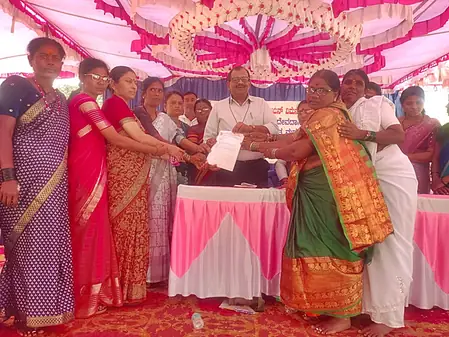
Bengaluru is witnessing a fervent call from the National Federation of Indian Women (NFIW) Karnataka unit to the state government. They demand a thorough and accurate resurvey of former Devadasis, a marginalized group long plagued by exploitation.
The Devadasi system, rooted in cultural traditions, has historically targeted vulnerable Dalit women, subjecting them to generations of social, economic, and sexual abuse. Young girls were symbolically married to temple deities, ostensibly dedicating their lives to service, but in reality, this masked widespread exploitation by powerful men.
Though legally banned, remnants of this pernicious practice linger in pockets of India. NFIW state president Jyoti A. highlighted glaring flaws in the recent resurvey. In February, Women and Child Development Minister Lakshmi Hebbalkar submitted a report to Chief Minister Siddaramaiah, identifying just 23,395 women—down from 46,660 in the 2007-2008 survey.
Jyoti questioned the minister’s oversight claims, pointing out no state-level monitoring or re-evaluation committee meetings occurred despite complaints. ‘We cannot accept a survey that betrays society’s most oppressed women,’ she asserted. Field workers report incomplete processes, with names omitted from old lists and new ones unapproved across thousands of cases in multiple districts.
Supervision at taluka and district levels remains sporadic, awareness campaigns are absent, and document requirements deter eligible women. NFIW secretary K. Renuka accused Karnataka Mahila Vikas Corporation officials of inaction despite repeated alerts. While victim numbers have declined, the practice isn’t eradicated, justifying no age limits in resurveys.
State committee member Shekamma alleged irregularities: non-Devadasis added to lists while genuine victims are excluded on flimsy pretexts. NFIW demands a full probe, justice for victims, and rejection of the flawed report for rehabilitation schemes. This push underscores the urgent need for transparent rehabilitation to uplift these forgotten women.