
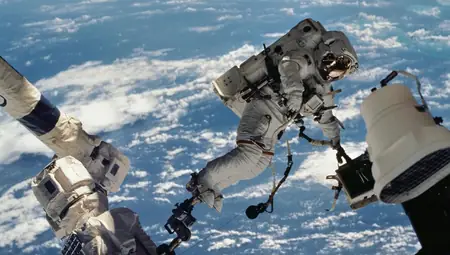
For over five decades, NASA’s Human Research Program has been unraveling the mysteries of how the human body copes with the harsh realities of space. This ongoing effort isn’t just academic curiosity—it’s vital for safeguarding astronauts, refining spacecraft designs, space suits, fitness regimens, nutrition plans, and mental health protocols. As missions evolve from low-Earth orbit to the Moon and Mars, understanding long-duration spaceflight effects has become mission-critical.
The Artemis program is pushing boundaries, aiming to return humans to the lunar surface while prioritizing astronaut health and data collection. Focus areas include physiological responses during extended missions. Astronauts like Scott Kelly and Christina Koch spent nearly a year on the International Space Station—double the typical stint—providing invaluable insights into physiological and psychological shifts that will inform strategies for decades.
NASA has coined ‘RIDGE’ to encapsulate five primary threats: Space Radiation, Isolation and Confinement, Distance from Earth, Gravity Fields, and Hostile/Closed Environments. Topping the list is space radiation, a pervasive danger absent on Earth thanks to our planet’s magnetic field and atmosphere.
In space, astronauts face three radiation sources: particles trapped in Earth’s magnetic field, solar energetic particles, and galactic cosmic rays—the most elusive and damaging. Prolonged exposure heightens risks of cancer, cardiovascular disease, and degenerative conditions like cataracts. Studies on animals and cells reveal space radiation’s superior destructiveness compared to terrestrial levels.
Moon and Mars journeys dwarf six-month ISS missions in duration, amplifying cumulative radiation doses and health perils. NASA’s countermeasures include advanced detectors for precise radiation monitoring, enhanced shielding, real-time tracking, and specialized procedures. Risks vary between short ISS stays and deep-space odysseys, guiding tailored preparations for future explorations.
These insights ensure humanity’s bold steps into the cosmos are as safe as possible, blending cutting-edge science with unyielding caution.