
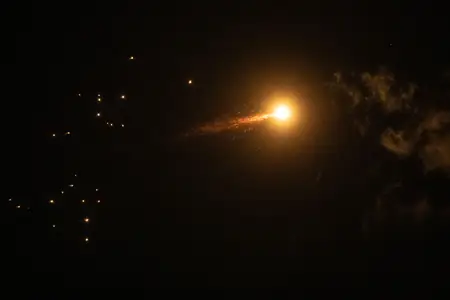
Washington has leveled serious accusations against Iran, alleging that Tehran is launching missiles without any clear target, aiming to sow maximum chaos across the Middle East. In a stark video release on Tuesday, the US military showcased footage of American airstrikes obliterating Iranian ballistic missile launchers hidden in mobile platforms.
According to US Central Command, Iran is deploying these mobile launchers from various undisclosed locations to strike indiscriminately, heightening tensions in an already volatile region. ‘We are hunting these threats and neutralizing them without hesitation,’ a military spokesperson declared, emphasizing swift action wherever danger emerges.
The escalation follows joint US-Israel operations, prompting Iran to retaliate with attacks on Gulf states. Tehran claims its missiles targeted US bases, but the strikes disrupted airports in Qatar, Oman, UAE, and Jordan, drawing fierce condemnation from regional leaders who decried the reckless aggression.
Amid the fury, Iran’s UN ambassador Ali Bahreini issued a stern warning in Geneva: any neighboring country allowing its bases to be used against Iran will face consequences. ‘We will defend ourselves until the aggression stops,’ he told reporters, underscoring Tehran’s resolve.
Iran’s President Masoud Pezeshkian, meanwhile, projected defiance on social media, insisting his government remains operational. ‘Decisions are now decentralized to provinces for faster, context-specific responses,’ he posted on X, countering US President Donald Trump’s boasts of eliminating 48 top officials, including Supreme Leader Ayatollah Khamenei.
As missile exchanges intensify, the international community watches warily, fearing a broader conflict that could engulf the oil-rich Gulf and disrupt global energy supplies. Diplomatic channels remain open, but military posturing dominates the narrative, with both sides digging in for a prolonged standoff.