
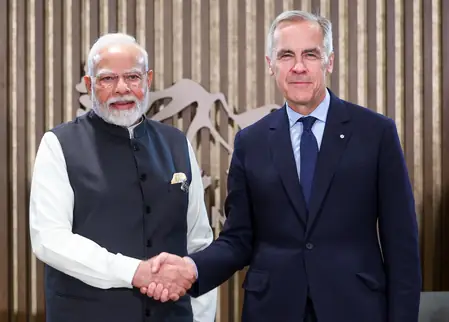
In a bold move to deepen economic ties in the Indo-Pacific, Canada has sealed a landmark $2.6 billion uranium supply agreement with India. This deal, highlighted in a recent One World Outlook report, positions Ottawa to capitalize on India’s surging industrial growth while diversifying beyond its traditional reliance on the U.S. market.
Announced under a comprehensive Strategic Energy Partnership, the pact links Canada’s premium uranium resources to one of the world’s fastest-expanding energy markets. Cameco, a leading Canadian miner, will supply approximately 22 million pounds of uranium to India’s civilian nuclear reactors from 2027 through 2035. This shift marks a departure from Canada’s past view of India primarily through the lens of its diaspora or diplomatic hurdles.
The partnership extends far beyond uranium, encompassing LNG, LPG, solar power, and hydrogen fuels. It’s a strategic pivot treating energy not just as a commodity but as the cornerstone of broader economic transformation. India’s massive population, skyrocketing energy demands, rapid industrialization, and geopolitical weight make it an irresistible partner for Canada.
Analysts point to India’s status as the world’s fastest-growing major economy, with energy needs projected to soar. This deal underscores Canada’s recognition of that potential. Looking ahead, the real game-changer could be a Comprehensive Economic Partnership Agreement (CEPA). Chief negotiators have met, initial terms signed, and Canada aims to double bilateral trade to $70 billion by 2030.
Diplomatic thawing is evident too. Foreign ministries confirmed discussions between Prime Minister Narendra Modi and his Canadian counterpart Mark Carney to restore diplomatic staff levels. Recent appointments, like Dinesh K Patnaik as India’s High Commissioner to Canada, signal efforts to steady relations post-Carney’s leadership ascent. This uranium pact isn’t just fuel for reactors—it’s fuel for a revitalized bilateral future.