
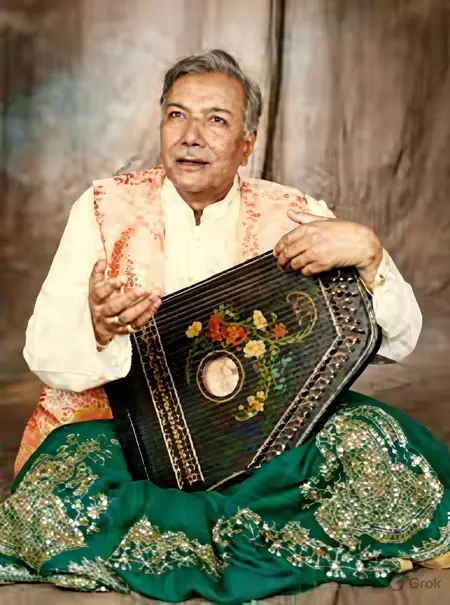
In the rich tapestry of Indian classical music, few stories shine as brightly as that of Ustad Ghulam Mustafa Khan. Born into a musical lineage in Badaun, Uttar Pradesh, on March 3, 1931, his life became a symphony of dedication and brilliance. From the tender age of eight, he captivated audiences, setting the stage for a career that would earn him India’s second-highest civilian honor, the Padma Vibhushan.
His family home echoed with the sounds of ragas and talas. Father Ustad Waris Hussain Khan and other relatives nurtured the young boy’s talent, making rigorous practice a daily ritual. This environment forged Mustafa into a prodigy, with his father as his first guru.
The pivotal moment arrived on Janmashtami at Victoria Garden in Badaun. Just eight years old, he was invited by the municipal chairman to perform. With unwavering confidence, young Mustafa rendered a raga that left the crowd spellbound. Whispers of ‘future star’ filled the air, marking his debut as the dawn of a legendary journey.
Though he lent his voice to films like Bhuvan Shome, Umrao Jaan, Aagman, and Shree Man Ashique, his heart remained anchored in classical music. Ustad Khan’s influence extended to mentoring giants such as Lata Mangeshkar, Asha Bhosle, Manna Dey, A.R. Rahman, and Sonu Nigam.
Awards poured in recognition of his contributions: Padma Shri in 1991, Sangeet Natak Akademi Award in 2003, Padma Bhushan in 2006, and the prestigious Padma Vibhushan in 2018. Tragically, a brain stroke in his later years led to his passing on January 17, 2021, in Mumbai at age 89. Yet, his melodies endure, inspiring generations in the world of Hindustani classical music.