
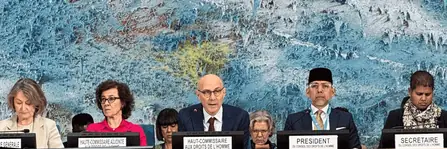
In a striking address at the United Nations Human Rights Council, High Commissioner Volker Turk showered praise on India’s vibrant civil society for safeguarding the nation’s democratic traditions and protecting minority rights. Speaking during the 61st session in Geneva, Turk highlighted his recent visit to India for the AI Impact Summit, where he witnessed firsthand the crucial role played by grassroots organizations.
“I was deeply impressed by the work of civil society during my recent trip to India,” Turk stated. “They play a vital role in upholding India’s democratic traditions and minority rights. It is essential that civic space is protected and that civil society can operate freely without restrictions.”
India’s model, Turk suggested, serves as a global beacon, demonstrating how active citizen engagement strengthens democratic institutions and ensures equity for all communities. This endorsement comes at a time when India’s commitment to pluralism is under international scrutiny.
Turning to darker realities elsewhere, Turk expressed grave concerns over Pakistan’s human rights record. He specifically condemned the 17-year prison sentences handed to two lawyers affiliated with human rights groups, punished solely for social media posts criticizing authorities.
“In Pakistan, lawyers and human rights defenders have been sentenced simply for posts on social media,” Turk lamented. This crackdown underscores a broader pattern of suppressing dissent in the country.
Turk’s remarks didn’t stop there. He urged Chinese authorities to cease using vague criminal, administrative, and national security laws to stifle rights. Calling for the release of arbitrarily detained individuals, he spotlighted the lack of accountability for abuses against Uyghurs, other Muslim minorities, and Tibetans in Xinjiang and beyond.
The High Commissioner also voiced alarm over Georgia’s restrictions on civic freedoms and Venezuela’s arbitrary detentions. “I regret the restrictions on civil rights in Georgia,” he said, demanding immediate releases and reviews of emergency measures to allow civil society participation.
As the session progresses, Turk promised further updates on March 16, emphasizing the UN’s unwavering commitment to global human rights accountability. His balanced yet pointed critique highlights the divergent paths nations tread in respecting fundamental freedoms.