
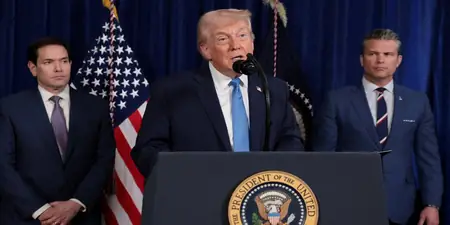
Washington is bracing for a high-stakes briefing as top Trump administration officials prepare to lay out the details of a major U.S.-led military strike against Iran. On Tuesday, March 3, key figures including Secretary of State Marco Rubio and Defense Secretary Pete Hegseth will address both chambers of Congress, amid growing divisions over the operation’s scope and legality.
White House spokesperson Dylan Johnson announced that the session will feature Rubio, Hegseth, CIA Director John Ratcliffe, and Joint Chiefs Chairman General Dan Caine. This comes after initial briefings with bipartisan staff from national security committees in both the House and Senate, which lasted over 90 minutes on Sunday.
The outreach reflects mounting tensions on Capitol Hill. Republicans have rallied behind President Trump’s decision, with Senate Majority Leader John Thune calling Iran’s nuclear ambitions and terror support a ‘clear and present danger.’ In contrast, House Minority Leader Hakeem Jeffries slammed the move, arguing it left U.S. troops vulnerable without prior congressional approval.
Media reports have filled in some operational gaps. The New York Times detailed a sophisticated ‘three-wave attack’ leveraging U.S. and Israeli intelligence, which decimated Iran’s high command and air defenses. Israeli jets reportedly dominated Tehran airspace, with former IAF commander Amir Eshel noting Iran’s skies are now wide open for strikes.
The Washington Post, citing U.S. Central Command, revealed U.S. forces targeted Iran’s naval fleet, sinking nine ships—including several key assets—as Trump boasted on social media. Meanwhile, the Wall Street Journal reported Iranian retaliation hitting Gulf airports, grounding over 3,400 flights and halting operations at Dubai International after drone strikes.
A Western security source told the Post that strikes on Iran’s intelligence headquarters killed at least four senior commanders. As Congress weighs its war powers under the Constitution—where it holds declaration authority but presidents often invoke commander-in-chief powers for limited actions—these briefings could spark intense debate, echoing past controversies in Iraq, Libya, and Syria.