
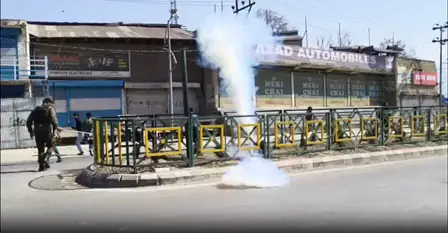
Srinagar erupted in unrest on Monday following unconfirmed reports of Iranian Supreme Leader Ayatollah Ali Khamenei’s death. Large crowds took to the streets in protest, but what began as a peaceful demonstration quickly turned violent in the heart of Kashmir’s summer capital.
Authorities had anticipated trouble, imposing restrictions across all districts of Jammu and Kashmir. Heavy security deployments dotted the cityscape, yet demonstrators gathered in defiance. As tensions escalated, protesters clashed with forces, prompting police to fire tear gas shells and wield batons to disperse the mob.
Eyewitness images captured chaotic scenes: security personnel chasing down agitators amid clouds of stinging gas. The crackdown was swift and decisive, aimed at preventing further escalation.
In a bid to contain the situation, mobile and internet services were suspended throughout Srinagar. Jammu and Kashmir Police announced the postponement of all examinations, while schools, colleges, and universities were shuttered until March 3. The administration’s order ensures educational institutions remain closed for at least two days.
Jammu and Kashmir Lieutenant Governor Manoj Sinha chaired a high-level security review meeting and urged citizens to maintain peace. In a post on X, he stated, ‘I have reviewed the security situation in Jammu and Kashmir and called upon all communities to exercise restraint and peace.’
Chief Minister Omar Abdullah echoed these sentiments on Sunday, expressing deep concern over escalating Middle East tensions. His office posted on X, highlighting worries about the Iranian events and appealing for calm to avoid any acts that could spark unrest.
The incident underscores the fragile peace in the region, where global events can ignite local passions. As investigations continue into the rumors, authorities remain on high alert, determined to restore order amid heightened sensitivities.