
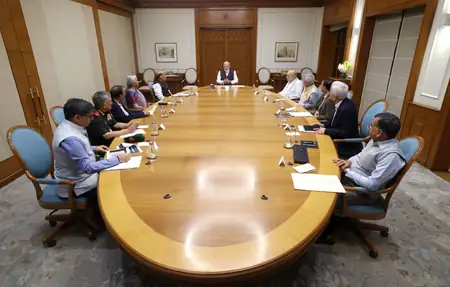
New Delhi erupted into high-level deliberations late on February 28 as Prime Minister Narendra Modi chaired a crucial Cabinet Committee on Security (CCS) meeting. The agenda was clear: dissecting the rapidly deteriorating security landscape in West Asia following a series of devastating aerial strikes on Iran and subsequent escalations rippling across Gulf nations.
The committee received a comprehensive briefing on the attacks that have heightened regional volatility. With millions of Indian expatriates scattered across these hotspots, the CCS expressed profound alarm over their vulnerability. Discussions extended beyond immediate threats, touching on disruptions faced by Indian travelers transiting through the region and students stranded amid exam schedules.
Broader implications loomed large—regional security frameworks, economic pipelines, and trade corridors all hanging in precarious balance. In a decisive move, the CCS issued directives to all pertinent ministries and agencies: spare no effort in safeguarding and assisting affected Indian nationals. Swift action plans were mandated, emphasizing consular support, evacuation protocols, and real-time advisories.
The panel underscored the imperative for de-escalation through dialogue and diplomacy, urging all stakeholders to prioritize peace over prolonged conflict. Prime Minister Modi, leading from the front, engaged directly with global counterparts. In a telephonic exchange with Israeli Prime Minister Benjamin Netanyahu, he conveyed India’s deep concerns over recent developments, stressing civilian protection as paramount and reiterating calls for an immediate cessation of hostilities.
Not stopping there, PM Modi connected with UAE President Sheikh Mohamed bin Zayed Al Nahyan on Sunday, extending condolences for losses incurred in the attacks and reaffirming India’s unwavering solidarity. He thanked the UAE leadership for their care towards the Indian diaspora and voiced strong support for tension reduction efforts aimed at restoring regional stability and security.
As tensions simmer, India’s proactive stance signals a commitment to protecting its citizens while championing diplomatic resolutions in one of the world’s most volatile theaters.