
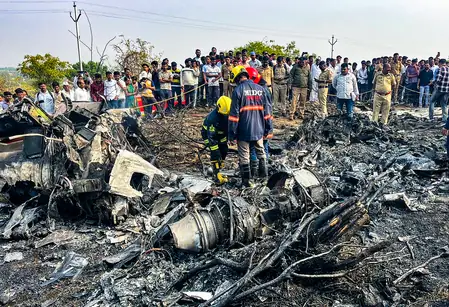
New Delhi witnessed a significant development on Saturday as the Aircraft Accident Investigation Bureau (AAIB) submitted its preliminary report on the tragic Baramati plane crash that claimed five lives, including Maharashtra Deputy Chief Minister Ajit Pawar, on January 28. This initial document draws from early-stage evidence and facts gathered during the probe, emphasizing its provisional nature. Experts caution that no firm conclusions should be drawn from it until the full investigation concludes.
The report underscores that investigations under ICAO Annex 13 and India’s Aircraft Accident Investigation Rules, 2025, aim solely to prevent future incidents, not to apportion blame. Both pilots were familiar with Baramati airfield’s layout, having flown there previously. Company records highlight their extensive experience with VIP flights and operations at uncontrolled airfields like Baramati.
Pre-flight breath analyzer tests for both the Pilot in Command (PIC) and First Officer (FO), conducted by a paramedic onboard, came back negative, as confirmed by video footage and breath analyzer slips. On the day of the crash, visibility at Baramati airport stood at around 3,000 meters—well below the 5,000 meters minimum required for VFR operations.
In its interim safety recommendations, the AAIB calls for stricter oversight of operations at small airfields, a review of their licensing, and urgent upgrades to landing and weather infrastructure. The probe continues, with the cockpit voice recorder data yet to be downloaded, assistance from the US National Transportation Safety Board anticipated.
This crash has sparked widespread concern over aviation safety at smaller Indian airstrips, prompting calls for immediate regulatory action to safeguard future flights.