
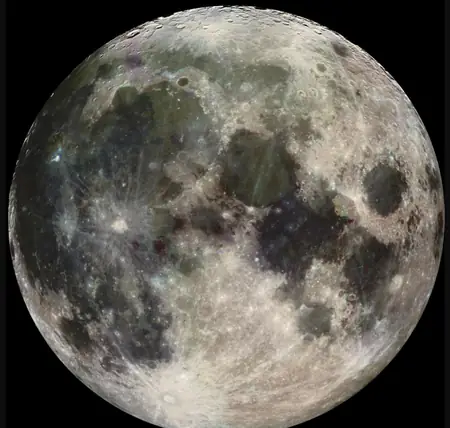
Have you ever gazed at the moon rising over the ocean or peeking behind city skyscrapers, only to be struck by its enormous size? This breathtaking sight leaves many in awe, but is the moon really swelling to giant proportions? NASA’s scientists say no – it’s all in our heads, a classic optical illusion that has puzzled humanity for centuries.
The moon illusion, as it’s known, makes the lunar orb appear massive when low on the horizon, yet perfectly normal when high overhead. Measurements confirm the moon’s diameter remains constant, about 3,475 kilometers, regardless of its position. Photographs taken with the same settings reveal identical sizes, debunking any physical change.
So why the trickery? Experts point to our brain’s visual processing quirks. When the moon hugs the horizon, surrounding landscapes like mountains, trees, or buildings provide scale references. Our minds interpret these as distant objects, making the moon seem comparatively larger to match.
Test it yourself next full moon. Extend your arm and hold up your index finger – it should match the moon’s apparent width on the horizon. Peer through a paper towel tube, and poof, the illusion vanishes, isolating the moon from earthly cues. Cameras don’t lie either; side-by-side shots prove the sameness.
Color plays a role too. Horizon moons glow orange or red because moonlight travels through thicker atmosphere, scattering blue wavelengths and leaving longer reds behind. Pollution amplifies this sunset-like hue.
Theories abound, from Ponzo illusion – where converging lines fool size judgment – to Emert’s law linking perceived distance to size. Even astronauts report similar effects in space, sans foreground, hinting at innate brain wiring or sky dome perceptions.
This enduring mystery reminds us how our senses can deceive, blending science and wonder in the night sky. Gaze upward, experiment, and marvel at the moon’s timeless deception.