
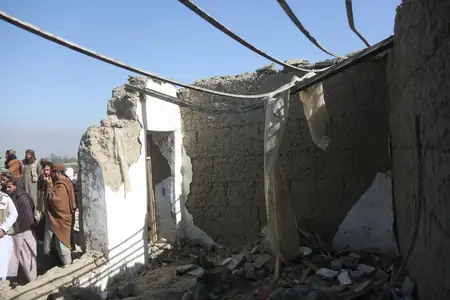
Tensions along the Afghanistan-Pakistan border have escalated dramatically, claiming at least 19 lives in the eastern provinces of Khost and Paktika. Afghan government deputy spokesman Hamdullah Fitrat confirmed the heavy toll, noting that most victims were women and children, with 26 others wounded in the fierce exchanges.
The clashes erupted amid heightened friction between Kabul and Islamabad. Taliban spokesman Zabihullah Mujahid countered by accusing a ‘specific group’ in Pakistan of launching destabilizing operations in the region. Speaking at a press conference in Kandahar, Mujahid urged neighboring countries to curb such disruptive elements and praised Afghan forces for precisely targeting Pakistani military positions.
Pakistan initiated airstrikes late Thursday on areas in Kabul, Kandahar, and Paktia provinces, prompting a swift retaliation from Afghan air forces. Fitrat detailed strikes on Pakistani military camps near Faizabad in Islamabad, an army cantonment in Naushera, a military colony in Jamrud, and sites in Abbottabad. These were direct responses to Pakistan’s bombings, which killed 13 Afghan soldiers and injured 22 more.
Afghanistan’s Defense Ministry reported successful counteroffensives along the border, eliminating at least 55 Pakistani troops, seizing 19 posts and two bases, at the cost of eight Afghan soldiers killed and 11 wounded. Earlier incidents included Pakistani missile strikes on a refugee camp in Nangarhar, injuring 13 civilians including women and children.
Mujahid emphasized Afghanistan’s preference for peaceful resolutions through dialogue, lamenting Pakistan’s unwillingness to engage constructively. He highlighted ongoing Pakistani aircraft incursions into Afghan airspace and accused Islamabad of fabricating pretexts for conflict while linking its internal issues to Afghanistan. Pakistan’s media, including Dawn, reported their ‘Operation Gajab Lil-Haq’ as a counter to Afghan incursions, with PAF targeting military sites.
As both sides dig in, the cycle of retaliation raises fears of broader regional instability, with civilians bearing the brunt of the violence. International calls for de-escalation grow louder, but prospects for dialogue remain dim amid mutual accusations.