
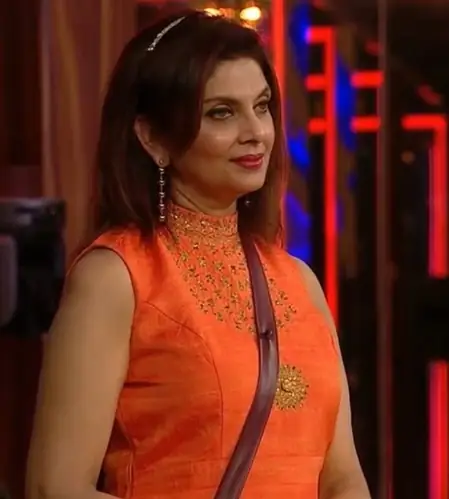
In the glittering world of 1990s Indian cinema, few stories are as enchanting as that of Varsha Usgaonkar, the actress who brought hits like ‘Doodh Ka Karz’ and ‘Tiranga’ to the screen. Yet, her most memorable role came not through auditions or relentless tryouts, but pure coincidence—landing the part of Uttara in B.R. Chopra’s iconic ‘Mahabharat’ TV series without a single screen test.
Born on February 28, 1968, in Goa to A.K.S. Usgaonkar, a former Deputy Speaker of the Goa Legislative Assembly, Varsha’s early career blossomed in Marathi theatre. Her breakthrough arrived swiftly in Marathi films, but the turning point was ‘Mahabharat.’ It fulfilled a long-standing dream of her father, who yearned to see his daughter grace the epic.
Varsha once shared in an interview how it all unfolded unexpectedly. The series had been airing for a year, and despite her father’s wishes, she hadn’t pursued a role. One day, accompanying family and guests to the sets, they witnessed the filming of young Abhimanyu’s scenes. Soon, the storyline would advance to his growth and marriage to Uttara. That’s when Gufi Paintal, the cunning Shakuni, spotted her. ‘Varsha, are you interested in playing Uttara?’ he asked out of the blue.
Stunned but with her parents’ enthusiastic approval, Varsha’s casting was sealed on the spot—no tests required. Her grand entry featured a mesmerizing Kathak-style dance choreographed by Gopi Ji, catapulting her to nationwide fame overnight. This exposure opened doors to Bollywood, where her dream of Hindi films materialized with ‘Doodh Ka Karz’ opposite Jackie Shroff in 1990.
Varsha’s journey began in theatre, launched by Sachin Pilgaonkar in the heroine-centric ‘Gammat Jammat,’ which redefined Marathi leading ladies with its breezy narrative diverging from typical social dramas. Success followed in films like ‘Tiranga,’ ‘Honeymoon,’ ‘Sone Ki Zanjeer,’ and ‘Ghar Aaya Mera Pardesi.’
Reflecting on industry differences, she noted Marathi cinema’s emphasis on comedy, strong plots, and substantial roles for women, often in cultural attire. Bollywood, by contrast, prioritizes glamour—meticulous makeup, hairstyles, and dressing for a pan-Indian audience.
Beyond acting, Varsha shines as a singer in Marathi, Hindi, and Konkani, embodying versatility in entertainment. Her serendipitous ‘Mahabharat’ moment remains a testament to destiny’s role in stardom.