
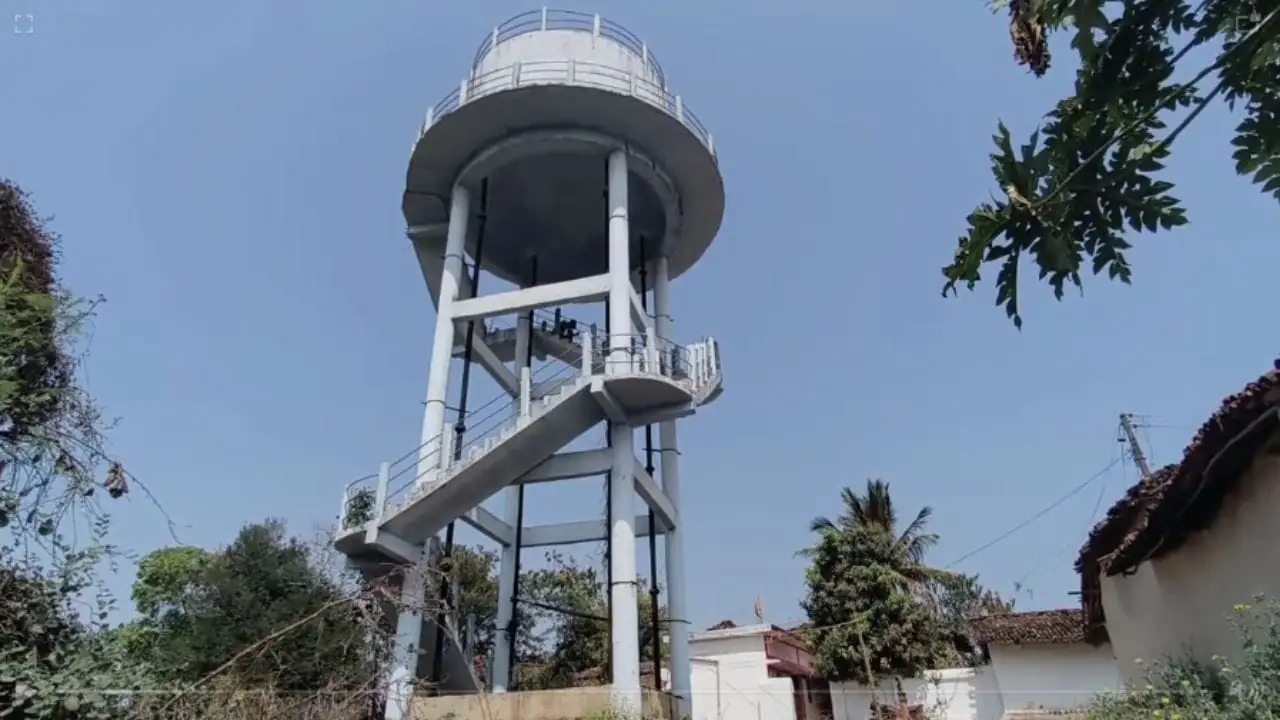
In the remote corners of Chhattisgarh’s Balod district, Kamkapar village stands as a stark symbol of governmental promises unfulfilled. Two years ago, under the ambitious Jal Jeevan Mission, a water tank was constructed, pipelines snaked through the streets, and taps installed in every home. Yet, not a single drop of water has flowed from these fixtures. What was meant to be ‘Har Ghar Nal’ – water in every household – has morphed into ‘Nal Bina Jal’, a tap without water.
The village, nestled in the forested fringes under Doundilohara block, houses over 3,000 residents across Kamkapar, Tekapar, and Kurubhat hamlets. Construction wrapped up in 2022, but the supply line remains dormant. No testing, no trials – just dry taps mocking the villagers’ daily struggle.
Residents like Manju Vishwakarma and Mahar Singh Deshmukh voice their frustration. ‘Everything is ready,’ they say, ‘but the tank stays empty.’ They depend on a lone solar pump, which falters under the burden, leaving them parched for days when it fails. Handpumps and bores have run dry, forcing women to trek miles for water.
Hope flickered when work began, promising relief from solar dependency. But two years on, despair lingers. During a district grievance redressal camp, Collector Divya Umesh Mishra heard their pleas. She assured swift action, directing the Public Health Engineering (PHE) department to resolve the crisis.
As summer looms, Kamkapar exemplifies the gap between policy and reality. Will the PHE department deliver, or will this village remain a thirst trap? The clock ticks for over 3,000 souls banking on that elusive first drop.