
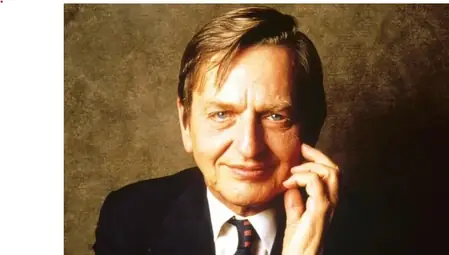
STOCKHOLM, February 28, 1986 – The bustling streets of Sweden’s capital were alive with the usual evening energy. Moviegoers spilled out from theaters, chatting casually under the open sky. No one could have predicted the tragedy about to unfold. In the midst of the crowd walked Olof Palme, Sweden’s Prime Minister, unaccompanied by any security detail. Moments later, a single gunshot shattered the night, and the leader collapsed, lifeless on the pavement.
Palme, a towering figure in global politics, had just emerged from the Grand Cinema with his wife, Lisbet. The couple often strolled freely like ordinary citizens, embodying Sweden’s deep-rooted democratic ethos and Palme’s personal disdain for the trappings of power. As they turned a corner on Sveavägen street around 11:21 PM, an unseen assailant fired from close range. The bullet struck Palme in the back, piercing his heart. Lisbet, grazed by a second shot, survived but witnessed the horror.
Olof Palme’s political journey was marked by bold stances that resonated worldwide. Serving as Prime Minister from 1969-1976 and again from 1982 until his death, he fiercely condemned the U.S. role in Vietnam, championed the anti-apartheid struggle in South Africa, and decried the nuclear arms race. His outspokenness earned him admirers and enemies alike, painting a target on his back in an era of Cold War tensions.
The assassination plunged Sweden into collective grief. A nation synonymous with peace and safety grappled with disbelief. Palme’s death wasn’t just a personal loss; it challenged the very fabric of Swedish society, where trust and openness defined daily life. Massive funerals drew millions, and vigils lit up the streets.
Investigations dragged on for decades, sifting through suspects and theories. Christer Pettersson, a local drifter, was convicted in 1989 but acquitted on appeal due to insufficient evidence. Conspiracy whispers – from Kurdish separatists to CIA plots – swirled endlessly. In 2020, prosecutors pointed to Stig Engström, a graphic designer dubbed ‘Skandia Man’ for his proximity to the scene. Engström, who died in 2000, had given inconsistent statements and tampered with evidence, they claimed. With no one left to charge, the case closed, leaving lingering questions.
Palme’s murder forced Sweden to confront its vulnerabilities. Security protocols for leaders tightened, innocence lost to suspicion. Yet his legacy endures: a symbol of principled leadership in turbulent times.