
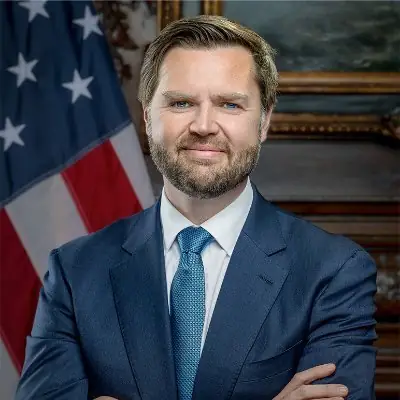
In a candid interview aboard Air Force Two with The Washington Post, US Vice President JD Vance firmly dismissed fears that America would be dragged into another protracted conflict in the Middle East. Speaking on February 27 from Washington, Vance emphasized that despite President Donald Trump’s contemplation of military options against Iran, the United States has no intention of committing to years-long regional warfare.
Vance clarified that while strikes on Iran remain under consideration to curb its nuclear ambitions, such actions would not spiral into endless engagements. ‘It’s unlikely we’ll be mired in a war without end in the Middle East for years,’ he stated, underscoring a cautious approach shaped by lessons from past interventions.
The 41-year-old former Marine, who served in Iraq, reiterated his skepticism toward foreign military adventures. Vance noted uncertainty over Trump’s final decision—whether through airstrikes or diplomacy—but stressed a preference for the latter. ‘We all prioritize diplomatic options, but it depends on what Iran does and says,’ he remarked.
Talks between the US and Iran continued in Geneva amid heavy American troop deployments around the country, though no breakthrough emerged. Mediators indicated discussions would resume next week. Trump has openly expressed interest in regime change, targeting Iran’s Supreme Leader Ayatollah Ali Khamenei as the ideal outcome.
Vance aligned his views with Trump’s ‘America First’ doctrine, warning against repeating historical mistakes like the Iraq invasion. He advocated vigilance, praising the president’s alertness to such risks. On Israel, Vance called for open debate within the Republican Party, viewing it as a key strategic ally while acknowledging dissenting voices.
This stance comes as the US maintains a significant military footprint in the Middle East for over two decades, post-2003 Iraq war. Tensions with Iran over its nuclear program and regional influence persist, with diplomatic efforts in Europe repeatedly aimed at containment. Vance’s comments signal a potential shift toward restraint, prioritizing American interests amid global pressures.