
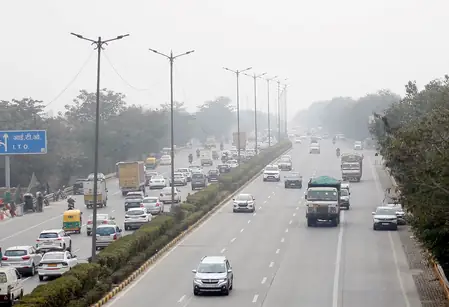
Noida saw a welcome shift in air quality on February 27 as brisk winds swept through the National Capital Region (NCR), pushing pollution levels down significantly. What was once a smog-choked skyline has now entered the ‘moderate’ yellow zone in nearly 80% of monitored areas across Delhi, Noida, and Ghaziabad.
Data from key stations paints a clearer picture. In Ghaziabad, Indirapuram clocked an AQI of 202, Loni at 247, Sanjay Nagar at 167, and Vasundhara at 192—all indicative of moderate pollution. Delhi’s neighborhoods followed suit: Alipur at 196, Anand Vihar lagging at 284, Ashok Vihar at 192, Aya Nagar at 163, Bawana at 213, and others hovering between 145 and 203.
Noida’s sectors also breathed easier, with Sector-62 at 146, Sector-1 at 139, and Sector-116 at 151. Residents are feeling the relief after weeks of hazardous air, though Anand Vihar remains a hotspot.
Meteorologists attribute this turnaround to strong winds dispersing pollutants effectively. Forecasts predict stable weather through March 1, with highs around 31°C and lows at 15-16°C, possible morning mist but no major alerts.
Experts caution that this is temporary. Continued winds could sustain improvements, but citizens should stay vigilant—masks outdoors, indoor air purifiers, and avoiding peak pollution hours remain essential for health protection in this bustling region.