
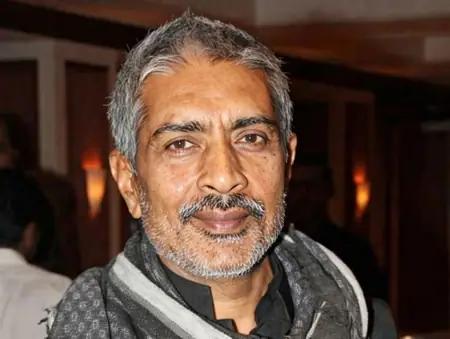
Mumbai, February 26: Renowned filmmaker Prakash Jha, celebrated for his National Film Awards, stands as a pillar of Indian cinema. Known for his hard-hitting films that mirror society’s political and social realities, few know that this master director once dreamed of wielding a paintbrush, not a camera. His ambition to become a painter propelled him from Delhi to Mumbai, where fate dramatically altered his path.
Born on February 27, 1952, in Bihar’s West Champaran district, Jha grew up in a rural setting. An excellent student, he pursued a BSc at Delhi University but felt a strong pull toward art. Ditching his studies midway, he headed to Mumbai to chase his painting dreams.
In the city of dreams, Jha immersed himself in painting, eager to carve a niche as an artist. One day, witnessing the shooting of ‘Dharma’ changed everything. The buzz of cameras, the energy of actors, and the filmmaking frenzy captivated him. He resolved to master the craft, enrolling at Pune’s Film and Television Institute of India. Though he didn’t complete the course, the skills he gained proved invaluable.
Struggles defined his early days. Arriving with just 300 rupees, he faced hunger and slept on footpaths. Undeterred, he pivoted to documentaries. His film ‘Face After the Storm’ earned a National Award, marking his breakthrough.
Jha’s feature debut ‘Hip Hip Hurray’ came in 1984, followed by ‘Damul’ on bonded labor, which won another National Award. Hits like ‘GangaJal’, ‘Apharan’, ‘Raajneeti’, and ‘Satyagraha’ followed, tackling corruption, politics, and societal ills head-on.
In personal life, he married actress Deepti Naval in 1985. They adopted a daughter, Disha, but parted ways after 17 years. Today, Jha’s legacy endures, proving destiny’s unpredictable turns.