
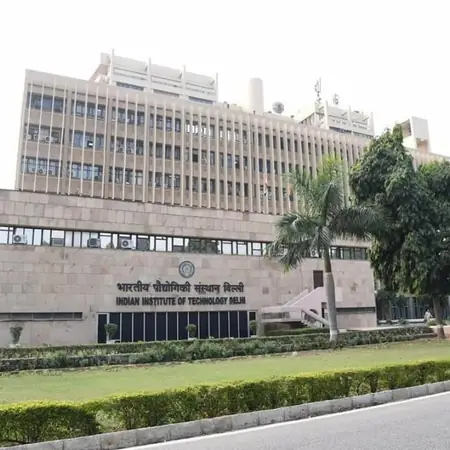
New Delhi is bracing for hotter summers, and IIT Delhi is leading the charge with a groundbreaking smart air conditioner designed to slash electricity bills and ease the strain on power grids. Researchers at the prestigious institute are testing a prototype in their labs that promises to cut energy use by nearly a third compared to traditional units.
Rising temperatures are not just making life uncomfortable; they’re a public health crisis and an economic drag. Government projections warn that cooling demand could triple by 2037-38, putting immense pressure on natural resources and household budgets. In response, IIT Delhi’s mechanical engineering team, led by Prof. Anurag Goyal, has engineered a hybrid system that tackles humidity more efficiently.
Conventional ACs overcool air to condense moisture, wasting energy in the process. This new design uses a salt solution behind a thin membrane to directly absorb humidity from the air without chilling it excessively. Once saturated, the solution regenerates using waste heat from the unit’s exterior, creating a closed-loop efficiency boost.
Prof. Goyal explains that in typical conditions, a standard room AC guzzles about 1,200 watts, but their hybrid version drops to around 800 watts—delivering the same comfort with 33% less power. Lab tests on the prototype are promising, and the team eyes widespread adoption in Indian buildings.
This innovation aligns perfectly with India’s Cooling Action Plan, addressing the surge in AC usage amid climate change. Detailed findings appear in the Journal of Building Engineering, marking a step toward sustainable cooling solutions for a warming world.