
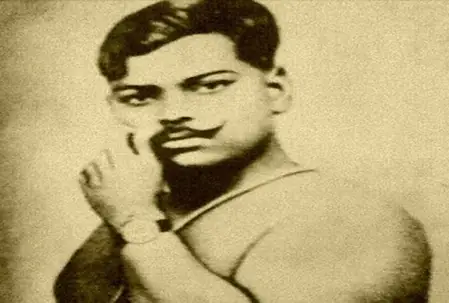
New Delhi, February 26: ‘We will face the enemy’s bullets, we have remained free, and we will remain free.’ These weren’t mere words for Chandrashekhar Azad; they were a sacred pledge to sacrifice everything for India’s independence. With a body forged like steel, a defiant twirl of his mustache, and eyes burning with the dream of a free nation, Azad scripted his own legend of unparalleled bravery.
Every February 27 marks the martyrdom anniversary of this revolutionary icon. In the oppressive 1920s and 1930s, when British tyranny peaked, Azad and his comrades ignited a revolutionary fire that shook the foundations of colonial rule.
Born on July 23, 1906, in Bhabhra, Alirajpur district of Madhya Pradesh, young Chandrashekhar’s spirit rebelled early. As a child, he hurled a stone at a British officer protesting police brutality, foreshadowing his fearless future.
At just 14, he joined Mahatma Gandhi’s Non-Cooperation Movement. Arrested, he boldly declared his name as ‘Azad,’ father’s name ‘Swatantrata,’ and address ‘Jail.’ Too young for imprisonment, the magistrate flogged him 15 times. With each lash, Azad shouted ‘Bharat Mata Ki Jai,’ earning his eternal name: Chandrashekhar Azad.
The withdrawal of Non-Cooperation after Chauri Chaura disillusioned him with non-violence. Azad believed true freedom demanded armed struggle. ‘If there’s no fire in your blood, it’s mere water,’ he proclaimed, rallying youth into the revolutionary fold.
He co-founded the Hindustan Socialist Republican Association (HSRA) with Bhagat Singh, evolving from the earlier Hindustan Republican Army. Their daring actions, like the Kakori Train Robbery, terrorized the British.
Azad evaded capture repeatedly, outsmarting police with cunning. His mantra: never surrender alive. On February 27, 1931, betrayed by an informer, British forces cornered him in Allahabad’s Alfred Park. In a fierce gunfight, out of bullets and refusing capture, Azad took his own life, honoring his vow.
Azad’s sacrifice symbolizes unyielding patriotism. Today, his spirit inspires millions, reminding us that freedom’s price was paid by such immortals.