
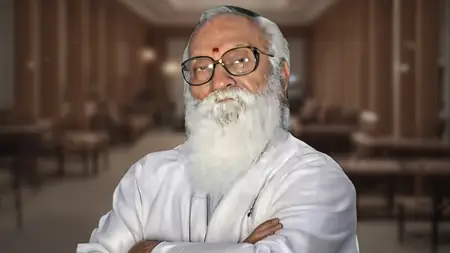
In the heart of Maharashtra’s Parbhani district, a young boy named Chandikadas Amritrao Deshmukh peddled vegetables under the scorching sun to afford his school fees and books. Little did anyone imagine this humble vegetable seller would rise to become one of India’s most revered political strategists and social reformers, affectionately known as Nanaji Deshmukh.
Born on October 11, 1916, Nanaji was deeply influenced by Bal Gangadhar Tilak’s ideals from childhood. His life took a transformative turn upon meeting RSS founder Dr. Hedgewar, leading him to dedicate himself entirely to nation-building. Sent to Gorakhpur, Uttar Pradesh, with no money or shelter, he navigated dharmshalas that limited stays to three days, forcing constant relocations.
Eventually, social worker Baba Raghavdas offered him refuge in exchange for cooking duties. Juggling roles as cook and propagator, Nanaji established 250 RSS branches in Gorakhpur and surrounding areas within three years, showcasing his organizational genius and grassroots prowess.
Even political adversaries admired him. During the 1948 RSS ban following Mahatma Gandhi’s assassination, Nanaji ran an underground network from the home of Congress leader Rafi Ahmed Kidwai, a feat of diplomatic brilliance. In 1975, evading Emergency arrests by disguising as a Sardar or merchant, he mobilized a nationwide movement for democracy’s restoration.
A defining moment came during the 1974 JP Movement in Patna. As police charged at 70-year-old Jayaprakash Narayan with batons, Nanaji shielded him with his body, breaking his arm but saving JP unscathed. This courage helped forge opposition unity, toppling Congress in 1977.
Offered the Industry Ministry in Morarji Desai’s cabinet, Nanaji declined at 60, retiring from politics to focus on social service. Through Deendayal Research Institute (DRI), he launched ‘Samaj Shilpi Dampati’ (SSD), sending educated young couples to villages for five years to eradicate superstitions, malnutrition, and illiteracy among tribals.
His ‘Vivaad-Mukt Gram’ (Litigation-Free Village) model empowered women and elders to resolve disputes at chaupals, preventing court cases. So successful was it that President APJ Abdul Kalam praised the Chitrakoot model nationally in 2006.
Honored with Bharat Ratna and Padma Vibhushan, Nanaji passed away on February 27, 2010, at 94, leaving a legacy of selfless service.