
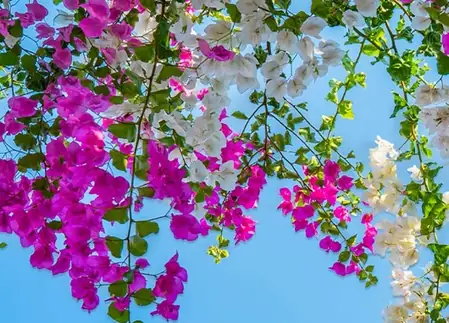
New Delhi, February 25. Bougainvillea, the vibrant flowering plant adorning gardens and streets with its dazzling hues of pink, orange, and purple, is far more than just a visual delight. This resilient beauty packs a punch of medicinal properties that have been revered in Ayurveda for centuries.
From its showy bracts mistaken for flowers to its roots and stems, every part of the Bougainvillea plant offers therapeutic value. Bihar’s Environment and Forests Department highlights its role beyond decoration, emphasizing its use in traditional and Ayurvedic medicine.
Belonging to the Nyctaginaceae family, Bougainvillea thrives in India’s warm climates and originates from South America. Its vivid colors – red, magenta, white, yellow – make it a favorite for landscaping, but its health benefits are equally compelling.
The floral bracts boast anti-inflammatory and antioxidant properties. A decoction or tea made from them provides quick relief from coughs, colds, sore throats, and respiratory issues. Leaves, when juiced or boiled, strengthen digestion, alleviate constipation, and ease stomach aches.
The stem and bark extracts are particularly noted for regulating blood sugar levels, making them valuable for diabetes management. Ancient texts and folk remedies praise Bougainvillea for treating fevers, inflammations, and various skin conditions.
What makes this plant even more appealing is its low-maintenance nature. It flourishes in full sun with minimal watering and continues blooming even in dry spells, proving it’s as practical as it is potent.
As awareness grows about natural remedies, Bougainvillea stands out as a readily available powerhouse for health and home beautification. Whether in urban balconies or rural gardens, this plant continues to bloom with promise.