
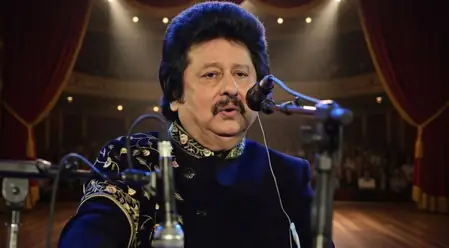
In the heart of a nation gripped by the tensions of the 1962 India-China war, a 10-year-old boy stepped onto a stage and poured his soul into ‘Ae Mere Watan Ke Logon.’ That boy was Pankaj Udhas, whose voice would one day captivate millions with soulful ghazals. The audience, moved to tears by his rendition of Lata Mangeshkar’s iconic patriotic anthem, showered him with applause and a heartfelt gift of 51 rupees—a moment that ignited his lifelong passion for music.
Born on May 17, 1951, in Jetpur, Gujarat, Pankaj grew up in a musically rich family. His father, Keshavbhai Udhas, a government employee with a deep love for music, and mother Jituben, an avid singer, nurtured the arts at home. Elder brothers Nirmal and Manhar were already established singers, creating an environment where melodies were as common as conversations.
That debut performance during the war wasn’t just a child’s whim; it was destiny calling. The small reward felt like the world to young Pankaj, laying the foundation for a career that blended classical training with commercial success. He pursued education diligently, earning a BSc from a Mumbai college while honing his craft at Rajkot’s music academy, mastering tabla before delving into Hindustani classical under Ustad Ghulam Kadir Khan and later Navrang Nagpurkar.
Pankaj’s film journey began modestly in 1972 with ‘Kamna,’ which flopped, prompting a stint abroad where he dazzled international audiences. Returning revitalized, his 1986 hit ‘Chithi Aayi Hai’ from ‘Naam’ skyrocketed him to fame. Albums like ‘Aahat’ (1980), ‘Mukarrar,’ ‘Tarranum,’ ‘Mehfilen,’ and ‘Aafreen’ followed, each weaving romance, longing, and emotion into timeless tracks.
Awards crowned his legacy: Padma Shri in 2006 and Padma Bhushan in 2025. Pankaj Udhas passed away on February 26, 2024, in Mumbai at 72, leaving behind a treasure trove of melodies that continue to resonate across generations.