
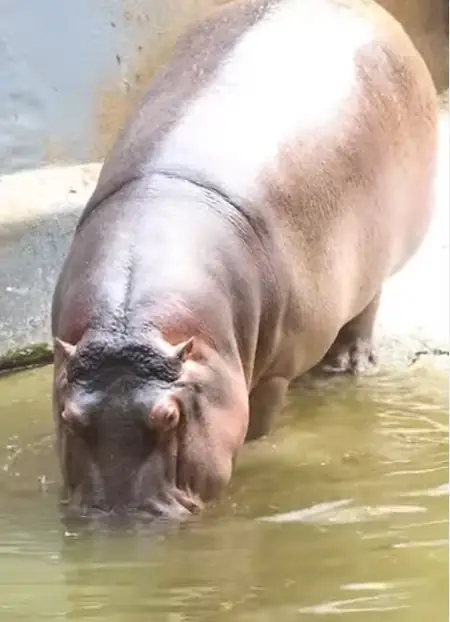
In the wild rivers of Africa and now even in Indian zoos, the hippopotamus stands as a marvel of nature. Known as the ‘river horse,’ this massive herbivore defies logic by weighing up to 3,200 kilograms while thriving on a plant-based diet. Its ability to breathe while submerged makes it an indispensable part of aquatic ecosystems.
Bihar’s Forest and Environment Department highlights how hippos maintain river health. Visitors to Patna’s Sanjay Gandhi Biological Park flock to see these behemoths, which draw crowds with their imposing presence. Scientifically related to pigs, not horses, hippos measure up to 14 feet long and 5 feet tall, supported by sturdy legs with broad nails.
Their eyes, ears, and nostrils perch high on the head, allowing surveillance and respiration even when mostly underwater. Valves seal these openings during full dives, preventing water ingress. At dusk, hippos emerge to graze up to 50 kilograms of grass nightly, returning to water before dawn to evade the sun’s harsh rays. Capable of 48 km/h sprints, they are far from sluggish.
Thick skin, once used to polish diamonds, secretes a rosy, oily substance that moisturizes and protects. Beneath lies a fat layer for buoyancy. Despite few hairs, their hides are tough and valuable, fueling illegal trade.
Threats loom large: habitat loss, droughts, poaching for meat, teeth, hides, and skulls. The common hippo is Vulnerable on IUCN’s Red List, pygmy hippos Endangered. Conservation demands habitat protection and curbing human encroachment. By clearing vegetation, hippos aerate waters, fostering fish habitats—proving their ecological vital role.