
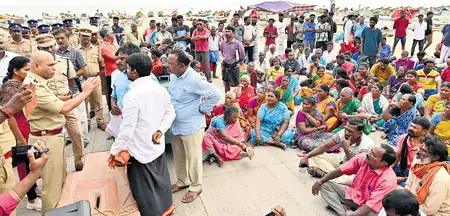
Chennai’s coastal communities are gearing up for a major showdown. On February 2, fishermen from 12 villages between Ayodhya Kuppam in Triplicane and Srinivasapuram in Santhome will form a human chain along Marina Beach. Their target: the state government’s plans to expand the Blue Flag beach project and introduce a rope car system.
Tensions have been simmering for months. Fishermen leaders say these tourism initiatives threaten their very survival. ‘We’ve already made sacrifices,’ said Selvaraj, a fisherman from Ayodhya Kuppam. ‘We vacated spaces for earlier phases, moved our boats, but now even the remaining spots are fenced off with bamboo barriers.’
The Blue Flag expansion aims to enhance Chennai’s beaches to international standards, attracting more tourists. But locals argue it comes at the cost of their traditional fishing rights. Marina Loop Road developments and the removal of beachside shops add fuel to the fire. Around 2,000 families depend on these small eateries and stalls.
‘We’re not against progress,’ emphasized community leader K. Bharati. ‘But development can’t evict us from our livelihoods.’ Fishermen point to ‘unequal enforcement’ – while they’re barred from temporary nets sheds, authorities build changing rooms, toilets, and rope car structures on the sand.
Sewage and garbage have already crippled near-shore fishing. With 30 boats and 10 catamarans at stake in one village alone, fears of complete displacement loom large. Vendors worry too: ‘Why allow only 300 shops? What about the rest?’ demands one woman seller.
The human chain protest demands dialogue before any further work. Without livelihood safeguards, these traditional communities face existential threats from unchecked coastal development. As February 2 approaches, Chennai’s shores brace for a clash between progress and preservation.