
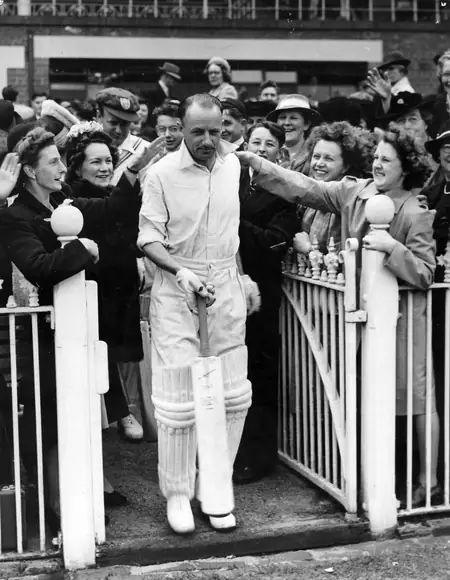
In the annals of cricket history, few names shine as brightly as Sir Don Bradman. Born on August 27, 1908, in New South Wales, Australia, Bradman transformed from a tennis enthusiast into the unparalleled master of the 22-yard pitch. His Test batting average of 99.94 remains an untouchable benchmark, a testament to his dominance that redefined the sport.
As a child, Bradman was captivated by tennis, showcasing remarkable skill on the court. But everything changed at age 10 when his father took him to the Sydney Cricket Ground. That visit ignited a passion that would propel him to legendary status. Young Don began honing his batting skills obsessively, turning a backyard practice routine into a revolutionary technique.
Bradman’s international debut came on December 5, 1928, against England. The match was inauspicious—18 runs in the first innings and a solitary run in the second. Little did the world know, this was merely the calm before the storm. By 1930, in the Ashes series against England, Bradman unleashed his genius, amassing 974 runs across seven innings. This record for most runs in a Test series still stands unbroken after nearly a century.
Over 52 Test matches, Bradman scored 6,996 runs at that staggering average, including 29 centuries and 13 half-centuries. He notched up 12 double centuries, a world record, and holds the distinction of never being dismissed for a duck in Tests. Against England, he slammed 19 centuries, the most by any batter against a single opponent.
Even the fiercest bowlers struggled to contain him. During the infamous 1932-33 Bodyline series, England targeted his body with brutal short-pitched bowling to curb his scoring. Undeterred, Bradman averaged 56 in the series, though England won 4-1. His resilience turned controversy into legend.
Bradman’s legacy endures beyond statistics. He elevated cricket’s tactical depth and inspired generations. Passing away on February 25, 2001, at 92, Sir Don left an indelible mark. Today, aspiring cricketers still chase the shadow of the man who made batting an art form.