
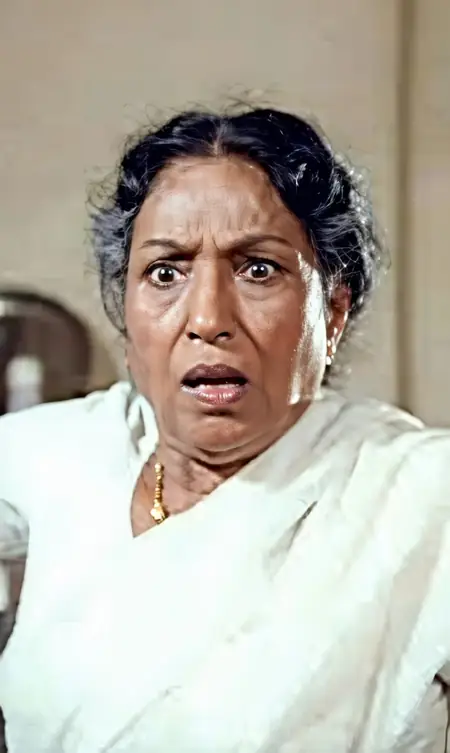
In the golden era of Bollywood, few actresses left an indelible mark like Lalita Pawar. Known for her chilling portrayals of tyrannical mothers-in-law, she terrified generations with her piercing gaze and commanding presence. Yet behind the screen villainy was a story of grit, tragedy, and unyielding perseverance.
Born on April 18, 1916, in Nashik, Maharashtra, as Amba Laxman Rao Sagun, Lalita hailed from a modest family. Her father traded in silk, while her mother managed the home. From a tender age, her passion for acting shone through, convincing her parents to let her step into the world of cinema.
At just nine years old, she made her debut in the silent film ‘Raja Harishchandra’ in 1928. Those were the days of mute cinema, but young Lalita’s expressive talent captivated audiences. She quickly became a sought-after child artist, starring in several films that laid the foundation of her illustrious career.
Ambition drove her to aspire for leading lady roles as she grew older. Tragedy struck during the shooting of ‘Jung-e-Azadi’ in 1942. In a dramatic scene, a co-actor slapped her with such force that she collapsed, suffering a ruptured vein in her eye and partial paralysis. The incident sidelined her for years, shattering dreams of stardom as a heroine.
Refusing to be defeated, Lalita reinvented herself. She embraced supporting roles, excelling as scheming antagonists and domineering saas figures. Her breakthrough came with the role of Manthara in Ramanand Sagar’s ‘Ramayan,’ a performance that cemented her as television’s most feared villainess, reaching millions of households.
Over six decades, she appeared in nearly 700 films across Hindi, Marathi, and Gujarati cinema. Her longevity earned her a Guinness World Record for the longest career as a female actor. Despite personal battles, including oral cancer, Lalita’s legacy endures. She passed away on February 24, 1998, leaving behind a treasure trove of memorable performances that continue to haunt and entertain.