
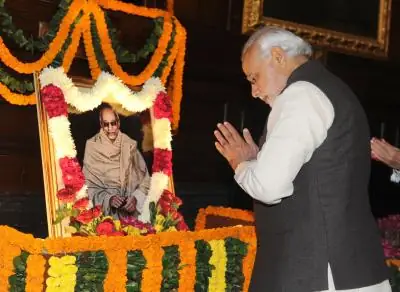
New Delhi is set to honor a key architect of independent India as the President’s House prepares to unveil the statue of C. Rajagopalachari, the nation’s first Indian Governor-General. This ceremony marks a pivotal moment in the ‘Rajaji Utsav’ celebrations scheduled for Monday at the Central Lawn of the Rashtrapati Bhavan.
Prime Minister Narendra Modi highlighted this development during the 131st episode of his popular radio show ‘Mann Ki Baat.’ He reflected on his ‘Panch Pran’ vision announced from the Red Fort during the Azadi ka Amrit Mahotsav, emphasizing the need to break free from the colonial mindset. ‘Our country is now moving away from symbols of slavery and embracing those rooted in Indian culture,’ Modi stated, praising the President’s House for this significant step.
Rajagopalachari, fondly known as Rajaji, exemplified public service throughout his illustrious career. ‘He viewed power not as a position of authority but as a platform for selfless service,’ the Prime Minister noted. His disciplined conduct, restraint, and independent thinking continue to inspire generations of leaders and citizens alike.
For decades, the premises of Rashtrapati Bhavan housed statues of British administrators, a remnant of colonial legacy that persisted even after independence. Modi expressed regret over this disparity, pointing out that while statues of British figures like architect Edwin Lutyens occupied prominent spaces, those of India’s freedom fighters and national heroes were sidelined.
In a symbolic replacement, the statue of Lutyens will make way for Rajaji’s likeness. This change underscores India’s commitment to honoring its own sons who shaped the destiny of the nation.
The festivities extend beyond the unveiling. A dedicated exhibition showcasing Rajagopalachari’s life and legacy will be open to the public from February 24 to March 1. The Prime Minister urged citizens to visit and delve deeper into the contributions of this remarkable statesman, whose multifaceted roles included roles as a freedom fighter, statesman, and founder of the Swatantra Party.
This initiative not only commemorates Rajaji’s enduring impact but also signals a broader cultural shift towards reclaiming and celebrating India’s indigenous heritage.