
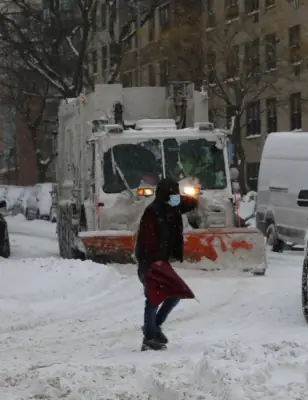
A ferocious winter storm has slammed into the northeastern United States, grinding transportation to a halt and impacting over 50 million people from Washington to Boston. Heavy snowfall, whipping winds, and widespread travel bans have turned major cities into snowbound ghost towns.
The National Weather Service labeled it a ‘major winter storm for the Northeast,’ forecasting intense snow through Monday in the northern Mid-Atlantic and Northeast regions. Some areas could see 2 to 3 inches per hour, with totals reaching up to two feet. Travel conditions are expected to become nearly impossible as snow piles up rapidly.
Blizzard warnings blanket multiple states. New York City’s weather office called it a ‘potentially historic blizzard.’ A travel ban kicked in Sunday night at 9 p.m., extending through Monday afternoon. Mayor Eric Adams urged residents: ‘New York hasn’t faced a storm of this magnitude in over a decade. Stay off the roads unless absolutely necessary.’ Schools will close Monday, marking the first traditional snow day since 2019.
New Jersey imposed a similar 9 p.m. travel restriction, while Rhode Island advised against driving after 7 p.m. Several states declared states of emergency as the storm intensified.
Air travel ground to a standstill, with airlines canceling nearly 8,000 flights for Sunday and Monday, primarily out of Boston and New York. LaGuardia and JFK airports scrapped about half their Sunday flights, with over 3,500 domestic and international departures axed by afternoon.
Boston and eastern Massachusetts brace for up to two feet of snow and winds gusting to 75 mph. The local weather service warned of a ‘potentially historic and crippling storm.’ Washington D.C. expects several inches of wet snow, prompting federal agencies to delay openings by two hours and schools to close or start late.
Coastal winds from Delaware to Cape Cod threaten severe flooding, capable of structural damage and widespread road submersion. Roughly 54 million people from the Central Appalachians to coastal Maine lie in the storm’s path under blizzard alerts.
The storm is projected to move past northern New England by Tuesday morning, leaving behind a trail of disruptions and cleanup challenges for recovery teams.