
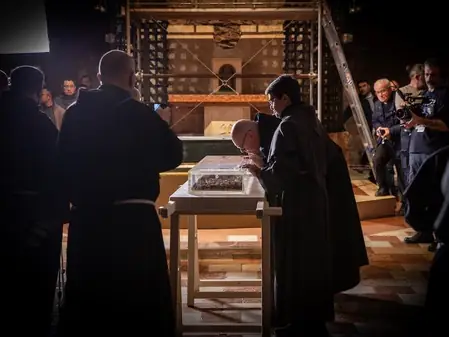
In a historic moment for pilgrims and history enthusiasts alike, the sacred remains of Saint Francis of Assisi, Italy’s revered patron saint, are now on public display for the first time in nearly eight centuries. This extraordinary event began on February 22 in the Basilica of Saint Francis in Assisi, drawing crowds from across the globe eager to glimpse the relics of the man known as the protector of the poor.
Saint Francis, born into wealth in the 13th century, renounced his family’s fortune to embrace a life of poverty and service. His radical choice inspired the Franciscan Order, which continues to thrive today. Dying on October 3, 1226, his body was interred in 1230 within the basilica built in his honor. Rediscovered in 1818 through secretive excavations, the remains have rarely been seen publicly—only briefly in 1978 for a select few during scientific studies.
Encased in a nitrogen-filled plexiglass container inscribed with ‘Corpus Sancti Francisci’ in Latin, the relics reveal the saint’s bones in their preserved, weathered state. Franciscan Convent Communication Director Giulio Cesarino described the display as a ‘profound experience’ for believers and skeptics alike, noting how the bones’ condition reflects Francis’s total dedication to his mission.
The exhibit, running until March 22, coincides with preparations for the 800th anniversary of his death, marked by a public holiday on October 4. Guardian Marco Moroni reported nearly 400,000 visitors already anticipated, including large contingents from Brazil, North America, and Africa—outnumbering even Italians.
This unveiling not only honors a spiritual giant but also bridges centuries, allowing modern visitors to connect with the humility that defined Saint Francis’s legacy. As lines form at the basilica, the event underscores his enduring message of compassion amid today’s world.