
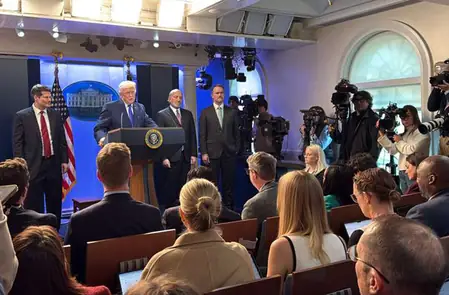
New Delhi erupted into analytical mode on Saturday as the Commerce and Industry Ministry issued a measured response to seismic developments in the United States. The US Supreme Court, in a landmark 6-3 decision, struck down broad tariffs imposed by President Donald Trump, deeming them unconstitutional for bypassing Congress. Hours later, Trump countered with a 10% import duty under Section 122 of the Trade Act of 1974, set to kick in on February 24 for 150 days.
The ministry’s statement acknowledged the court’s verdict and Trump’s press conference, where he announced emergency powers to address ‘fundamental international payment problems.’ ‘We have noted the US Supreme Court’s decision on import duties yesterday. President Trump held a press conference on this matter. The US administration has announced certain steps. We are studying the impacts of all these developments,’ the statement read.
This swift judicial rebuke highlighted the constitutional limits on presidential tariff authority, reserved strictly for Congress. Trump’s workaround invokes rarely used provisions allowing surcharges on imports to tackle balance-of-payments crises. A White House fact sheet clarified exemptions for critical goods: key minerals, energy products, fertilizers, pharmaceuticals, electronics, and passenger vehicles.
Additionally, Trump directed the US Trade Representative to probe unfair foreign practices under Section 301 that burden American commerce. For India, a major US trading partner, these shifts could ripple through exports in textiles, IT services, and pharmaceuticals. Ministry officials are dissecting potential scenarios, from duty hikes on non-exempt items to retaliatory measures.
As global markets digest this tariff tango, New Delhi’s cautious approach signals preparedness without panic. The coming weeks will reveal if this temporary levy stabilizes US trade deficits or ignites a broader transatlantic trade skirmish. India’s exporters brace for uncertainty, while policymakers weigh diplomatic and economic responses.