
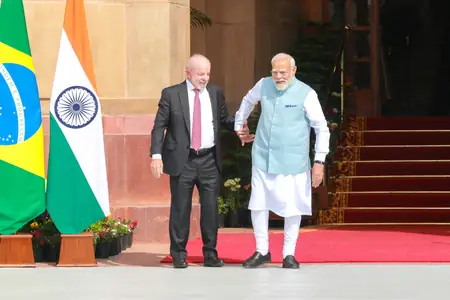
In a landmark move to bolster bilateral ties in the steel sector, India and Brazil signed a Memorandum of Understanding (MoU) on Saturday, focusing on mining and minerals essential for steel production. The agreement, inked at Hyderabad House in New Delhi, was witnessed by Prime Minister Narendra Modi and Brazilian President Luiz Inacio Lula da Silva.
This partnership aims to enhance the efficiency of raw material preparation for steel manufacturing. It will drive technology-led improvements across the steel value chain, ensuring a more robust and sustainable India-Brazil steel supply chain. According to the Steel Ministry, the MoU establishes an institutional framework to deepen cooperation in the steel value chain.
Key objectives include promoting reliable and sustainable development of critical raw materials needed for steel production. The collaboration will attract investments in exploration, mining, and infrastructure development. It emphasizes advanced processing and recycling technologies for minerals, automation in exploration and mining, AI-driven geoscientific data analysis, and best practices in mineral extraction, processing, and environmental management.
Brazil stands as one of the world’s top producers of iron ore, boasting vast reserves of vital minerals like manganese, nickel, and niobium crucial for steelmaking. This tie-up is expected to improve India’s access to these essential raw materials and technologies, supporting the long-term growth of its steel industry.
India’s current steel production capacity stands at 218 million tonnes, with domestic companies aggressively expanding to meet surging demand fueled by infrastructure growth and industrialization. This MoU marks a pivotal step toward collaborative development of mineral resources, advanced processing, beneficiation, recycling, and data-driven exploration techniques.
As global supply chains face uncertainties, this strategic alliance positions both nations to secure stable supplies and innovate in sustainable steel production, potentially reshaping regional dynamics in the metals sector.