
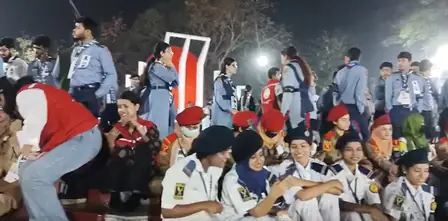
Dhaka, February 21 – In a poignant tribute marking International Mother Language Day, students, activists, and political supporters gathered at the National Martyrs’ Memorial on the Dhaka University campus to honor those who sacrificed their lives for Bengali in 1952. The commemoration began just after midnight, with crowds staying through the early hours to pay floral respects to the language martyrs.
The 1952 Language Movement stands as a defining moment in Bangladesh’s history. Students and citizens took to the streets demanding recognition of Bengali as an official language, defying the imposition of Urdu by Pakistani authorities. The protests turned deadly when security forces opened fire, claiming several lives. This sacrifice paved the way for global acknowledgment of linguistic rights.
A student at the event shared with reporters, ‘Even if someone studies in English-medium institutions, they must learn and respect Bengali. Otherwise, the very purpose of our martyrs’ struggle would be lost.’
Student leader Moksoda Moni echoed these sentiments, stating, ‘Today, we remember our language heroes who fought for our mother tongue on this very day in 1952. Their blood ensures we speak Bengali with pride today.’
Social activist Afrina Parveen expressed joy over the day’s worldwide recognition: ‘I’m proud that International Mother Language Day is celebrated globally, thanks to our martyrs. I offer them my deepest respect.’
A supporter of the Bangladesh Nationalist Party (BNP) added, ‘Participating in this dawn ceremony fills me with pride. It’s our mother tongue’s day. We Bengalis will never forget the Pakistani army’s brutality against peaceful protesters.’
Established by UNESCO in 1999 following a proposal from Bangladesh, International Mother Language Day is observed annually on February 21. It promotes linguistic diversity and multilingual education. The 2026 theme, ‘Youth Voices for Multilingual Education,’ highlights the role of young people in preserving language heritage.
This year’s gathering at Dhaka University not only commemorated the past but also reinforced the ongoing commitment to cultural identity and diversity. As Bangladesh reflects on its linguistic legacy, the echoes of 1952 continue to inspire global movements for mother tongue rights.