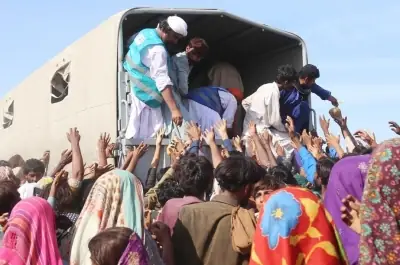
Islamabad’s fragile food security hangs by a thread as a stark United Nations report reveals that nearly 7.5 million people are grappling with acute hunger and malnutrition. Devastating floods from last year’s monsoons, prolonged droughts, and escalating violence have compounded the crisis, pushing vulnerable communities to the brink. The Integrated Food Security Phase Classification (IPC) analysis paints a grim picture for the coming months. From December 2025 to March 2026, around 1.25 million individuals could slip into ‘Emergency’ levels of food insecurity. Agriculture and livestock sectors, the backbone of rural livelihoods, lie in ruins. Data from the Household Integrated Economic Survey (HIES) shows food expenditure dropping from 43% in 2005 to 37% by 2025, while housing and utilities jumped from 15% to 25%. This shift signals cutbacks on nutrition amid stagnant real incomes. Food insecurity has surged, with moderate-to-severe cases rising from one in six to one in four people between 2018-19 and 2024-25. The Institute of Social and Policy Sciences (I-SAP) reports families footing 2.8 trillion Pakistani rupees of the 5.03 trillion total education spend, outpacing public contributions.
UN Alert: 7.5M Pakistanis Face Severe Food Insecurity Crisis
World 1 Min Read