
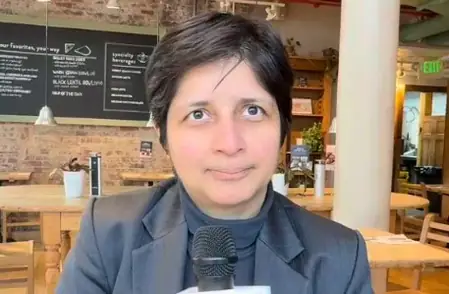
Washington, February 18. Despite a seemingly warmer facade in US-Pakistan relations over the past year, with high-level dialogues on the rise, the foundational dynamics remain unchanged. South Asia expert Aparna Pande from the Hudson Institute asserts that most shifts are merely symbolic, offering Pakistan no substantial economic or military benefits on the ground.
Pakistan is set to participate in the inaugural ‘Board of Peace’ meeting in Washington this week, convened by President Donald Trump. Prime Minister Shehbaz Sharif will attend, with Islamabad touting the visit as evidence of strengthening ties. Yet, Pande cautions that this is more performative than transformative.
“The trip is primarily for the Board of Peace meeting,” Pande explained. “Pakistan will likely highlight the evolved US-Pakistan relationship since last year, emphasizing personal rapport between their Prime Minister, Army Chief, and President Trump.”
Expectations include pushes for trade discussions and bilateral sideline meetings. “Whether those happen remains to be seen,” she added. Symbolically, relations appear robust, but Pande doubts meaningful internal changes in Pakistan over the last one-and-a-half years.
On Gaza, Pakistan seeks a prominent role in Muslim-world issues. Participation in the Board or Gaza responsibilities could boost domestic approval. However, Pande warns against perceptions of the Pakistani military aligning with Israel over Palestinian civilians, which would backfire. Islamabad demands clarity on expectations for any international stabilization force involving its troops.
Domestically, congressional queries might arise, but the Trump administration is unlikely to probe, viewing it as outside their purview. Pakistan leverages its geography for relevance in Iran, Gaza, and Palestine matters, anticipating tangible bilateral gains. Instead, it has received only symbolic endorsements and vague investment promises—no concrete economic windfalls.
Frustration simmers in Pakistan; its Defense Minister recently likened US treatment to using the country as ‘toilet paper.’ Militarily, advanced US equipment won’t come easily—Pakistan must purchase independently, strained by finances despite potential Saudi or Turkish aid.
Economically, US firms could invest in key minerals, many in insurgency-plagued Balochistan. Persistent security woes deter foreign ventures, stalling progress. While optics improve, experts like Pande see little structural evolution, urging realism amid the rhetoric.