
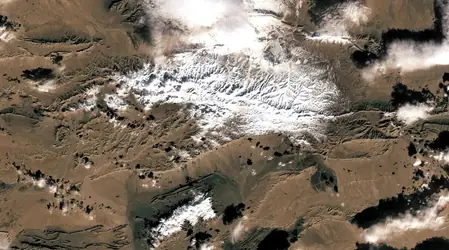
In the heart of the scorching Sahara Desert, known for its endless dunes and blistering heat, an unimaginable event unfolded 47 years ago. On February 18, 1979, the town of Ain Sefra in southwestern Algeria witnessed a rare snowfall that blanketed the golden sands in white. This phenomenon in one of the world’s hottest deserts marked a historic moment in climate records.
Spanning nearly 9.2 million square kilometers across North Africa, the Sahara typically sees daytime temperatures soaring above 40°C. Snowfall here defies all expectations. During that fateful day, temperatures plummeted near freezing, transforming raindrops into snowflakes as cold Mediterranean winds swept southward.
Meteorologists explain that chilly, moist air from the Mediterranean clashed with the cooler, elevated regions near the Atlas Mountains, creating the perfect storm for precipitation to freeze. The snow didn’t last long—melting within hours—but photographs and eyewitness accounts captured the surreal scene forever.
Ain Sefra, dubbed the ‘Gateway to the Desert,’ sits at the foothills of the Atlas range, where slightly lower elevations make such anomalies possible under extreme conditions. This wasn’t a one-off; similar light snowfalls occurred in 2016, 2018, and 2021, highlighting the desert’s capacity for surprises.
While not directly linked to modern climate change, the 1979 event underscores the complexity of Earth’s weather systems. It serves as a reminder that nature can rewrite its own rules, even in the driest places on the planet. Today, these images continue to inspire awe, teaching us about the unpredictable beauty of our world.