
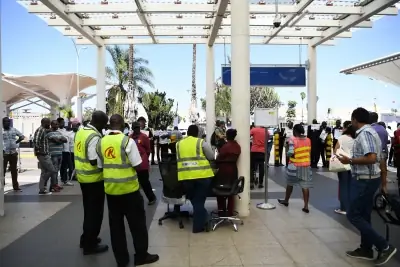
Nairobi’s bustling Jomo Kenyatta International Airport ground to a partial halt on Monday as striking workers threw operations into chaos. Thousands of passengers faced hours of delays and uncertainty, highlighting deep-seated labor tensions at one of Africa’s premier aviation hubs.
The strike erupted early in the morning, triggered by a long-simmering dispute between the Kenya Aviation Workers Union and the Kenya Civil Aviation Authority (KCAA). At the heart of the conflict is a stalled collective bargaining agreement (CBA) dating back to 2015, with employees demanding overdue salary revisions and unfulfilled promises spanning a decade.
As air traffic control faced disruptions, airlines scrambled to manage the fallout. Kenya Airways urged passengers to monitor updates via their website and app, warning of impacts on both arrivals and departures. The airport, which handles millions of travelers and vast cargo volumes annually, saw long lines and frustrated crowds building up rapidly.
Kenya Airports Authority swiftly activated contingency plans, issuing advisories for passengers to check flight statuses with airlines. KCAA Director General Emil Arao reassured the public that efforts were underway to restore normalcy, prioritizing stranded travelers on a phased basis.
‘Operations are stabilizing gradually, and we expect the regular schedule to resume soon,’ Arao stated. Authorities emphasized safety as the top priority, advising extra travel time to the airport.
This incident underscores ongoing challenges in Kenya’s aviation sector, where labor unrest threatens the efficiency of a critical economic gateway. While alternative measures have mitigated some damage, the strike serves as a stark reminder of unresolved grievances that could recur without swift resolution.