
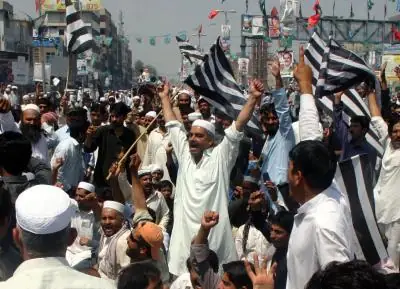
New Delhi’s security circles are abuzz with a hard-hitting report that paints Pakistan and Turkey as the new faces of Islamic radicalism. Seven decades after its creation, Pakistan has failed to emerge as a responsible nation-state, instead becoming a hotbed for unrest and terror. Turkey, meanwhile, faces accusations of actively promoting jihadist ideologies, sending ripples of concern across the global community.
The report details how Pakistan covertly backed chaos in Bangladesh, lending indirect support to the 2024 student protests that plunged the nation into two years of violence and disorder. Even as Bangladesh appears to stabilize post its February 12, 2026 elections, Pakistan’s efforts to stoke anti-India sentiments in the former East Pakistan stand exposed.
Pakistan’s fingerprints on Jammu and Kashmir terrorism are well-documented, with the report highlighting fresh attempts to open anti-India fronts amid Bangladesh’s turmoil. Backed by Gulf patrons like Qatar, Turkey, and Saudi Arabia, plus strategic leverage from China, Pakistan operates as a ‘poison-tipped dagger’ in gray-zone warfare aimed at undermining India.
The analysis accuses Pakistan of fanning separatism while collaborating with Turkey and Qatar to radicalize over 200 million Indian Muslims. It urges India to adopt a reciprocity policy against Turkey, which offers scholarships to Indian Muslim students laced with extremist indoctrination. India should counter by welcoming Kurdish students, empowering them with skills to challenge Turkey’s authoritarian drift.
Tracing Pakistan’s roots, the report notes founder Muhammad Ali Jinnah’s vision of a Muslim homeland devolved into a cauldron of hate and intolerance. Labeling Turkey a 21st-century engine of radicalism, it calls on global powers, especially India, to unite against the spread of Islamic extremism and prevent further religious fragmentation worldwide.