
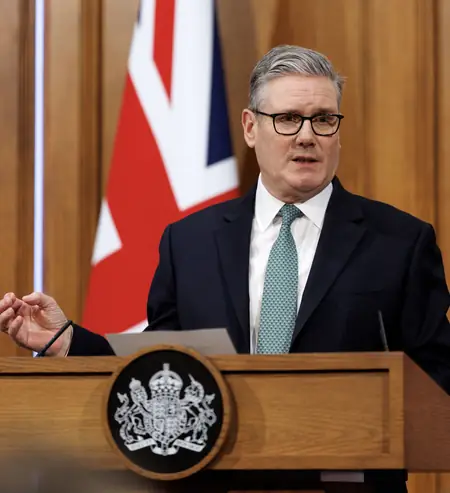
MUNICH – In a stark warning at the 62nd Munich Security Conference, British Prime Minister Keir Starmer called on Europe to forge robust hard power capabilities, declaring it the essential currency of our era. Speaking at the prestigious Bayerischer Hof hotel, where leaders from over 60 nations and 50 international organizations gathered from Friday to Sunday, Starmer emphasized the urgent need for readiness to deter aggression and, if necessary, fight to protect democratic values.
The conference, a cornerstone of global security discussions, drew unprecedented attention amid rising geopolitical tensions. Starmer painted a clear path forward: ‘We’re not at a crossroads; the road ahead is straight. We must build our hard power because that’s the currency of this age.’ He stressed that Europe must stand on its own feet, capable of defending its people, principles, and way of life against any threat.
Delving into post-Brexit relations, Starmer advocated for deeper alignment with the European Union’s single market in key sectors. Six years after the UK’s departure from the trading bloc, he proposed leading a generational shift in defense industrial cooperation. ‘Deep economic integration benefits us all,’ he said, urging exploration of closer ties in areas where mutual gains are evident.
Echoing these sentiments, EU Commission President Ursula von der Leyen underscored the intertwined futures of Europe and Britain. ‘We need to cooperate more closely on security, economy, and safeguarding our democracies,’ she stated. Even a decade after Brexit, she affirmed, ‘Our futures remain bound together.’
Starmer’s address signals a pivotal moment for transatlantic and European security strategies. As threats evolve, his push for hard power and renewed economic partnerships could reshape alliances, ensuring Europe is not just reactive but proactively fortified against tomorrow’s challenges.