
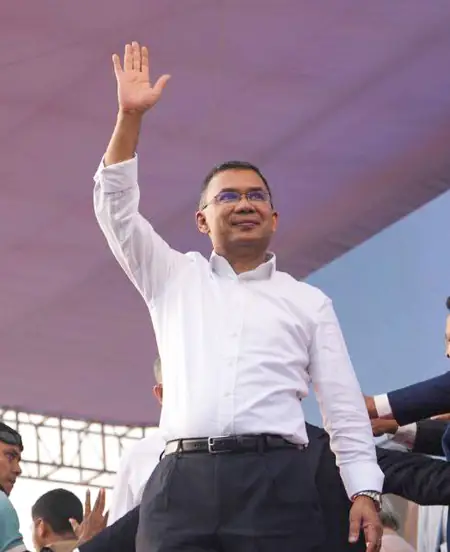
Dhaka is buzzing with anticipation as Bangladesh edges closer to forming its new government following a landmark election victory. Shafiqul Alam, press secretary to interim government chief advisor Muhammad Yunus, announced on Saturday that the oath-taking ceremony will occur no later than Tuesday. ‘It won’t happen after Monday or Tuesday,’ Alam asserted during a briefing at the Foreign Service Academy, underscoring that the nation won’t wait more than three days.
Preparations are in full swing, with all logistics for the swearing-in finalized. Responsibilities are being swiftly delegated by Chief Advisor Yunus and the cabinet. However, the authority tasked with administering the oaths remains undecided, with an announcement promised soon.
Alam also debunked rumors of 200% voter turnout in one constituency, labeling it a typographical error by an overzealous reporter who failed to consult the returning officer. The mistake was promptly corrected.
The excitement stems from Thursday’s general elections, where the Bangladesh Nationalist Party (BNP) and allies secured 212 of 297 declared seats. BNP alone clinched 209, with smaller partners like Gono Samhati Andolan, Bangladesh Jatiya Party (BJP), and Gono Odhikar Parishad each grabbing one. Jamaat and its allies took 77 seats, including 68 for Jamaat and six for National Citizen Party (NCP). Two seats await court resolution.
This triumph paves the way for BNP chairperson Tarique Rahman to become prime minister, ending 20 years of Awami League rule under Sheikh Hasina from 2008 to 2024. Rahman won convincingly from two seats. West Bengal Chief Minister Mamata Banerjee congratulated him, calling him ‘my brother Tarique’ and praising his team.
Remarkably, Rahman’s ascent marks the first male prime minister in 35 years, since Kazi Zafar Ahmad in 1988. The era of female leaders Sheikh Hasina and Khaleda Zia, dominating since 1991, now yields to new leadership. Tarique Rahman is set to address the media on Saturday, offering his official response to the victory.
As Bangladesh turns a historic page, the smooth transition signals stability and renewed democratic vigor in the region.