
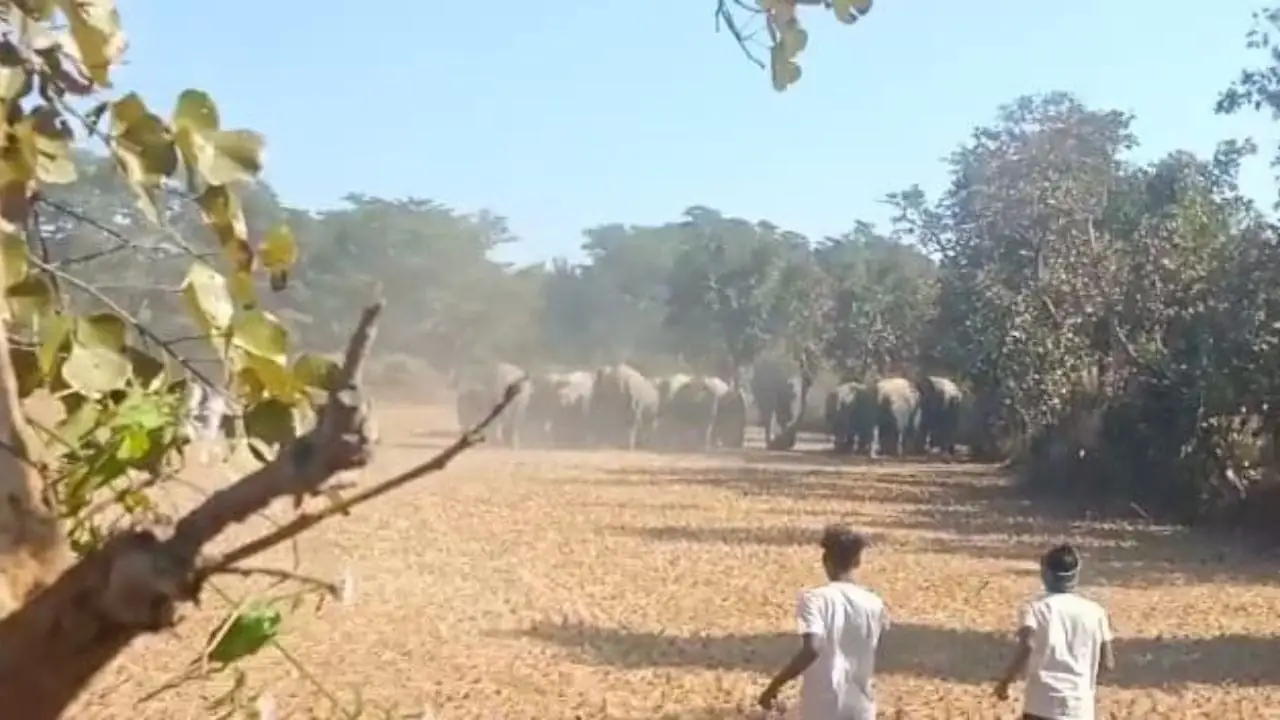
In a shocking escalation of human-elephant conflict, a herd of wild elephants rampaged through two villages in Jharkhand’s Hazaribagh district late Thursday night into Friday, trampling seven people to death. Among the victims were four members of the same family, sending waves of terror through the local communities.
The attacks occurred in Gondwar and Kajri villages under the Churchu block. Eyewitness accounts describe a sudden intrusion by the elephant herd around midnight, catching villagers off guard as they slept in their homes. The deceased include Suraj Ram, Savita Devi, Dhaneshwar Ram, Suman Devi, and Phulmani Kisku from Kajri. Tragically, two minors were also among the victims, amplifying the grief in these tight-knit rural areas.
This horrific incident is part of a disturbing pattern in Jharkhand. Just weeks earlier, in West Singhbhum district, elephant herds claimed 22 lives in January alone, including seven from one village in a single night—five from the same family. Bokaro district saw five more fatalities in early February in Gomia and Peterbar areas.
Experts attribute the rising attacks to shrinking forests, rampant mining, and blockages in traditional elephant corridors, forcing herds into human settlements. In 2023, a similar tragedy in Ranchi’s Itki area killed four, prompting authorities to impose Section 144 to restrict movement.
Villagers, living in constant fear, now take night watches to guard their homes. They demand urgent action from forest officials. Solutions like protecting migration routes, early warning systems, and barriers along village-forest fringes could prevent future bloodshed, but implementation remains slow.