
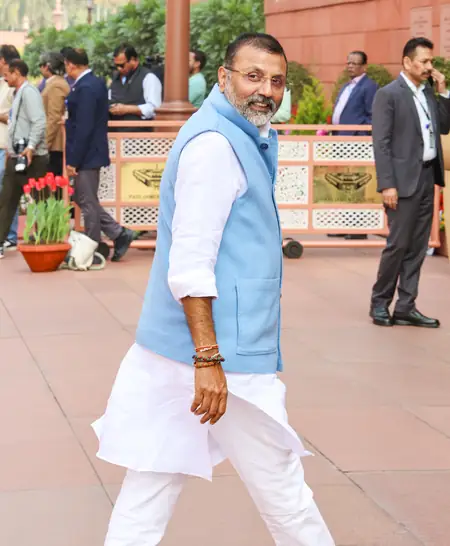
In a dramatic escalation of political tensions in India’s Parliament, BJP MP Nishikant Dubey has invoked a historic 1978 precedent to demand the expulsion of opposition leader Rahul Gandhi from the Lok Sabha. Dubey, drawing parallels to the ouster of former Prime Minister Indira Gandhi, has moved an original motion accusing Gandhi of breaching House privileges.
The move comes hot on the heels of a fiery exchange in the Lok Sabha, where Gandhi sharply criticized the government’s India-US trade deal, alleging it compromises national interests and effectively ‘sells out Mother India.’ Ruling party members erupted in protest, labeling his remarks unparliamentary and demanding their expungement from the record.
Dubey, undeterred, took to social media platform X to share excerpts from 1978 parliamentary records. He highlighted how a similar privilege motion led to Indira Gandhi’s membership termination and subsequent imprisonment in Tihar Jail. That episode stemmed from Emergency-era allegations involving interference in probes related to her son Sanjay Gandhi’s Maruti project.
Explaining the parliamentary mechanism, Dubey noted that an original motion is a standalone resolution brought before the House for debate and voting. Once admitted, it triggers intense discussions culminating in a division vote. In 1978, after protracted debates, the motion passed on December 19, resulting in Gandhi’s expulsion and six-month jail term, though it was later reversed in 1981 upon her return to power.
Dubey’s resolution accuses Rahul Gandhi of misleading the House and aligning with ‘anti-national forces.’ He seeks not just disqualification from the current term but also a lifetime ban from contesting elections. The BJP MP formally tabled the motion as a private member, prompting the government to hold back its own proposed action, as announced by Parliamentary Affairs Minister Kiren Rijiju.
Congress leaders dismissed the charges as politically motivated, asserting Gandhi’s right to critique government policies on critical issues like energy security and farmer welfare. This confrontation underscores deepening divides between the treasury and opposition benches ahead of key legislative battles.
As the Lok Sabha gears up for debate on the motion, political observers see it as a high-stakes gambit by the BJP to counter opposition attacks. Whether it gains traction remains to be seen, but it has reignited memories of Parliament’s most contentious privilege battles.