
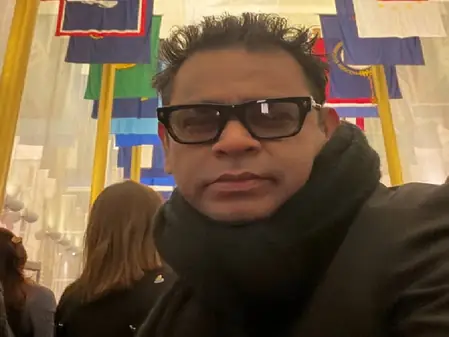
In a high-profile clash between classical vocalist Ustad Fayyaz Wasifuddin Dagar and Oscar-winning composer AR Rahman, the Supreme Court has postponed its hearing on the controversy surrounding the song from Ponniyin Selvan 2 until next Friday. The dispute centers on allegations that Rahman used a unique rhythmic pattern created by Dagar’s late father and uncle without permission.
During Friday’s proceedings, Dagar’s counsel argued passionately that while the lyrics of ‘Veera Raja Veera’ differ, the song’s beat and structure mirror the ‘Shiv Stuti’ composed by Nasir Fayyazuddin Dagar and Zahiruddin Dagar. This family-invented ‘Sooltal’ rhythm, distinct from the ancient Chautaal pioneered by Amir Khusro centuries ago, forms the crux of the claim under copyright law.
Chief Justice Suryakant acknowledged the Dagar family’s unparalleled contributions to Indian classical music, crediting them with elevating the Dhrupad tradition across generations. ‘The Dagar family needs no introduction,’ he remarked, adding that modern musicians owe much to their foundational work. Yet, he balanced this by noting Rahman’s stature in the global music scene.
Rahman’s senior advocate, Abhishek Manu Singhvi, sought more time to prepare, leading to the adjournment. This legal battle traces back to last year when a single bench of the Madras High Court ordered Rahman to credit the beat and deposit Rs 2 crore. However, a division bench overturned it, finding insufficient proof of the Dagars’ authorship.
As the case heads to its next round, it underscores the tensions between traditional custodians of classical forms and contemporary filmmakers adapting them for mass audiences. The coming hearing could set crucial precedents for intellectual property in India’s evolving music landscape.