
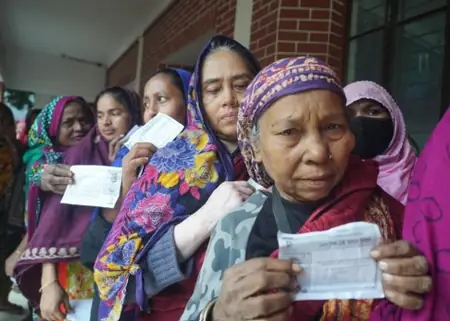
Dhaka is buzzing as Bangladesh’s crucial parliamentary elections kicked off Thursday morning. Polling began at 7:30 AM local time across 42,779 centers nationwide, covering 299 seats. Voting will wrap up by 4:30 PM, paving the way for immediate vote counting and the formation of a new government.
This election comes 18 months after massive protests toppled former Prime Minister Sheikh Hasina’s 15-year rule. It’s a landmark moment, coinciding with a referendum on an 84-point reform package that could reshape the nation’s constitutional framework. With roughly 127 million registered voters, about 44% are aged 18-37, signaling a youth-driven shift in the country’s politics.
Expectations are high for over 127 million votes, as per reports from The Dhaka Tribune. Women make up 62.88 million of the electorate, with 2.7 million first-time female voters outpacing 1.87 million new male registrants—a promising trend for gender participation.
Yet, female candidates remain underrepresented, with only 83 women in the fray—63 from parties and 20 independents—accounting for just 4% of total contenders. Security is paramount: nearly 958,000 personnel are deployed nationwide, bolstered by over 100,000 army troops in sensitive zones to ensure smooth polling amid past unrest.
The Awami League stands banned, leaving the Bangladesh Nationalist Party (BNP) as the frontrunner. The main contest pits BNP against an alliance led by Jamaat-e-Islami. Tarique Rahman, son of former PM Khaleda Zia and back after 17 years, emerges as a key figure, campaigning on job creation, law and order, and free speech.
As polls progress, all eyes are on turnout and results that could redefine Bangladesh’s future. The youth bulge and reform referendum add layers of intrigue to this high-stakes democratic exercise.